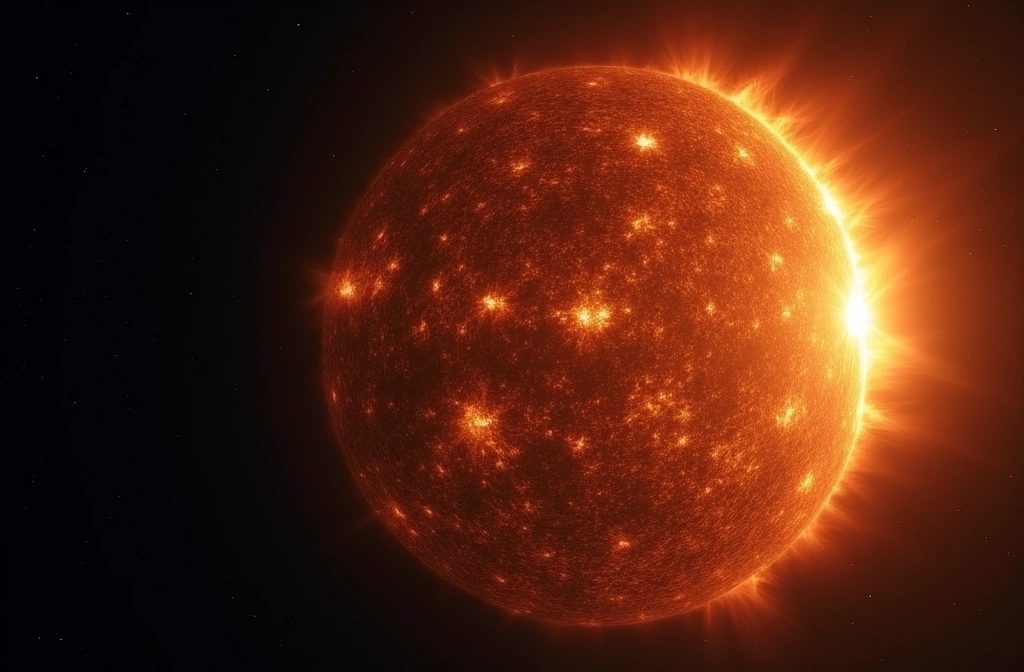
According to EarthSky's Sun news report dated June 17, 2026, sunspot region AR4464 remained active over the past day, firing a number of jets before departing to the sun's far side. Critically: no geomagnetic storm conditions occurred during this activity. NOAA's Kp index currently sits just above level 1—well below the threshold for measurable magnetic disturbance.
Why this matters for preparedness: When active sunspot regions rotate to the far side of the sun, Earth-facing monitoring becomes impossible for 10–14 days. AR4464's documented jet activity demonstrates it retains energy. If it produces significant solar flares or coronal mass ejections (CMEs) while out of view, we receive no advance warning—detection occurs only when the disturbance reaches Earth.
This is not an imminent threat scenario. Current Kp readings indicate normal space weather. However, the principle is worth noting: the sun's rotation creates natural intelligence blackouts. A highly active region departing the visible disk means baseline forecasting confidence drops temporarily.
Historically, this pattern has proven manageable. Most departing sunspot regions either decay or produce only minor activity during their far-side transit. The 2003 Halloween storms—which triggered regional power disruptions—occurred from regions that remained visible to NOAA satellites throughout their eruptive phase. The key difference: we saw them coming.
For grid operators and emergency managers, the tactical implication is straightforward: elevated alert posture during far-side transits of active regions is justified, but not escalated response. Standard monitoring protocols remain adequate for current solar conditions.
Watch the Kp index and NOAA space weather forecasts when AR4464 rotates back into view in late June or early July. If it re-emerges with sustained M-class or X-class flare potential, that changes the calculus. Until then: observe, track, don't react.
