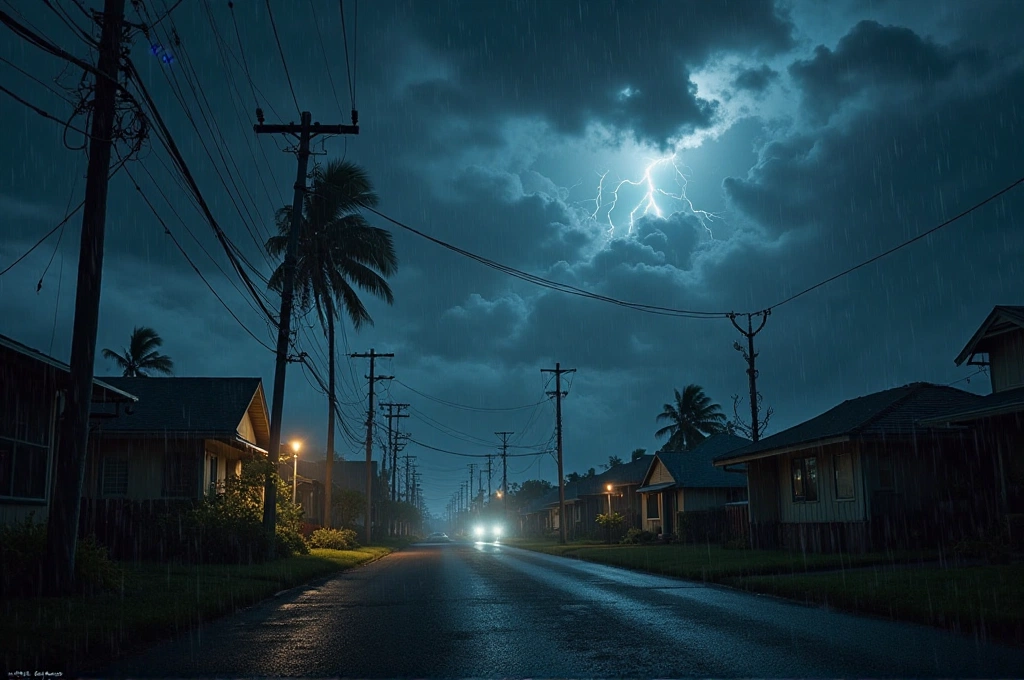
Tropical Storm Lala made landfall on Hawaii's main islands after weakening from hurricane classification on Sunday, according to reporting from KKTV. The storm's passage resulted in widespread power outages affecting more than 100,000 customers and at least one death — a 90-year-old woman whose death was linked to the storm conditions.
The event triggered infrastructure disruptions typical of tropical cyclones in the Hawaiian archipelago: extended power loss, debris cleanup operations, and forced closures of schools and offices across affected areas. These cascading effects highlight a persistent vulnerability in island-dependent power grids where restoration timelines can extend significantly due to geographic isolation and limited repair resources.
For preparedness analysis, this event underscores a critical pattern: tropical cyclones routinely exceed the operational resilience assumptions built into regional grids. The 100,000+ customer outage suggests that Hawaiian utility infrastructure — despite being designed for tropical weather — may face growing pressure from storm intensity trends and aging distribution systems. Extended power loss in island communities creates secondary risks: fuel supply interruptions, refrigeration failures, medical equipment dependency, and communication breakdowns that disproportionately affect elderly and medically vulnerable populations.
The reported fatality may signal cascade failures in the immediate response environment — medical support delays, transportation disruption, or acute environmental exposure during cleanup operations. Storm-related deaths often reflect infrastructure strain as much as meteorological force.
WHAT TO WATCH: Restoration timelines for the 100,000+ affected customers and any reports of secondary cascading failures (fuel shortages, water system disruptions, medical supply gaps). These indicators will reveal whether Hawaiian utilities and emergency management possessed adequate surge capacity or faced saturation.
