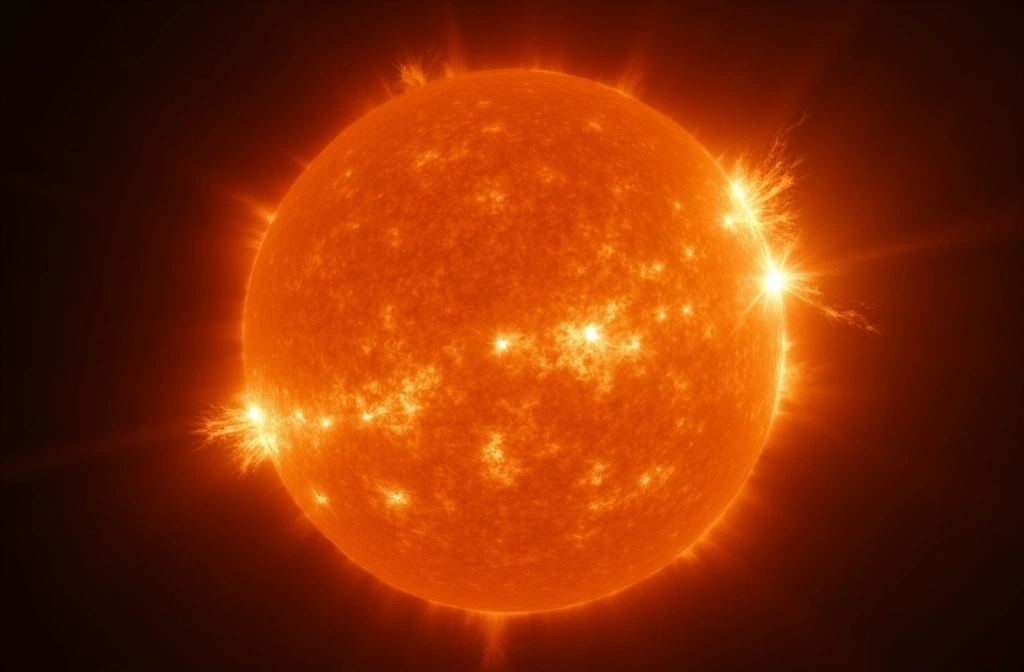
Two M-class solar flares and three active sunspot regions are currently driving solar activity, according to Earth Sky reporting on June 30, 2026. The event has triggered two separate coronal mass ejections (CMEs) with staggered arrival windows that will keep geomagnetic conditions unsettled-to-active through the first week of July.
Timing matters here. A CME from June 26 is expected to arrive and produce minor storm periods with a possible upgrade to G2 (moderate) geomagnetic storm conditions. A second CME from June 27, arriving on July 1, is expected to sustain unsettled-to-active conditions, though Earth Sky notes this second CME's lower speed suggests modest overall impact. By July 2, lingering effects should begin to fade, with geomagnetic conditions gradually returning to quiet levels.
For infrastructure operators, the G2 possibility is the immediate watchpoint. G2 storms can produce weak power grid voltage control problems and minor impacts on satellite operations—rarely catastrophic, but enough to stress aging grid equipment or force temporary load adjustments. Communications systems typically perform normally at G2 levels, though aurora visibility will extend significantly south of high latitudes.
What makes this noteworthy is the dual-CME sequence. Single events are routine; consecutive arrivals within 24 hours can compound effects and extend the active window. Grid operators have this data and should be running contingency protocols. Satellite operators are already aware.
The real question isn't whether this will cause widespread damage—the current forecast doesn't support that. The question is whether this sequence reveals anything about underlying solar magnetic structure that could hint at larger activity ahead. Three potent sunspot regions on the visible disk suggests the Sun's active zone has room to produce stronger activity. Earth Sky's forecast explicitly calls conditions 'modest'—a signal that escalation isn't expected in the immediate term, but continued close monitoring is warranted.
