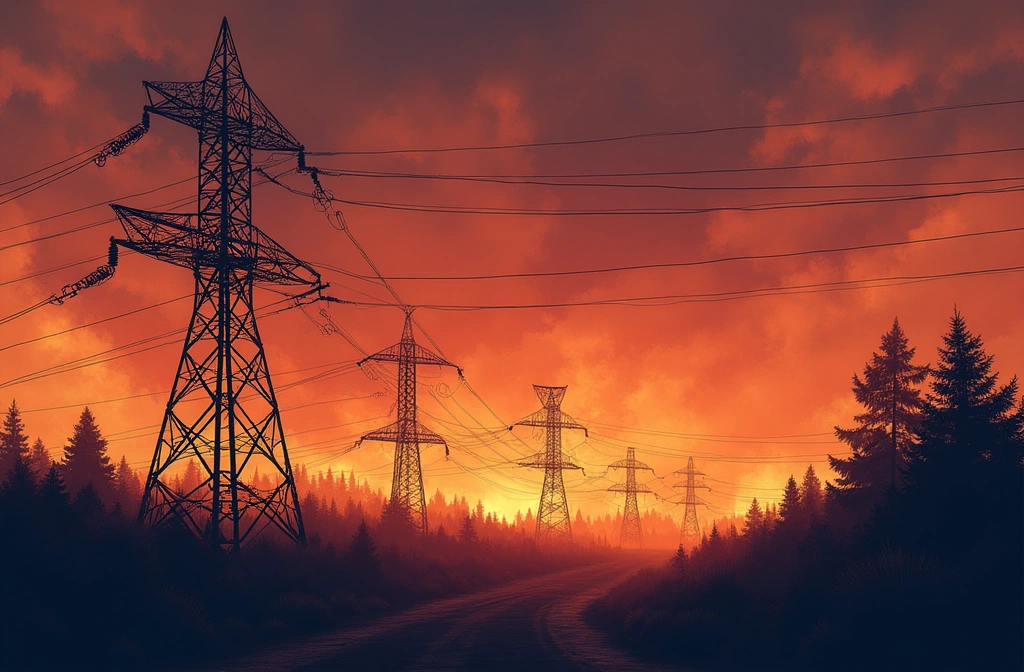
Deborah Petterson, director at Neso (the UK's grid operator), has publicly warned that intense heatwaves followed by heavy rainfall and wildfire pose an emerging risk to power infrastructure. According to the Daily Mail report, Petterson stated: 'We very much focused on intense heat, followed by heavy rainfall and wildfire, because we've seen this very rapid change in the sort of physical aspects of climate that our industry hasn't necessarily seen before.'
The concern is concrete: wildfires can damage or destroy transmission lines carrying power across regions, potentially triggering cascading outages. A 600% surge in wildfire incidence would dramatically increase exposure of grid assets to fire damage during peak summer demand—when cooling loads strain capacity most heavily.
What makes this credible is the source. Neso is the entity responsible for balancing Britain's electrical system and managing grid stability. When its leadership identifies a specific threat pattern—heat followed by rain followed by fire—it reflects operational concern based on grid modeling and risk assessment, not speculation.
The signal here is structural: the grid's current transmission line routing, hardening standards, and maintenance cycles were designed for historical weather patterns. Rapid shifts in climate behavior (intense heat, extreme precipitation swings, fire severity) can outpace infrastructure adaptation. Petterson's language—'hasn't necessarily seen before'—indicates this is a known-unknown: the grid operator sees the risk but cannot yet fully quantify it or guarantee mitigation.
For preparedness purposes, this matters because blackouts driven by wildfire are often unscheduled, region-wide, and sustained. Unlike planned maintenance outages, fire-induced failures offer no advance notice and may take days to restore if transmission infrastructure is compromised. Summer 2026 is worth monitoring closely for early wildfire season signals and grid strain indicators.
