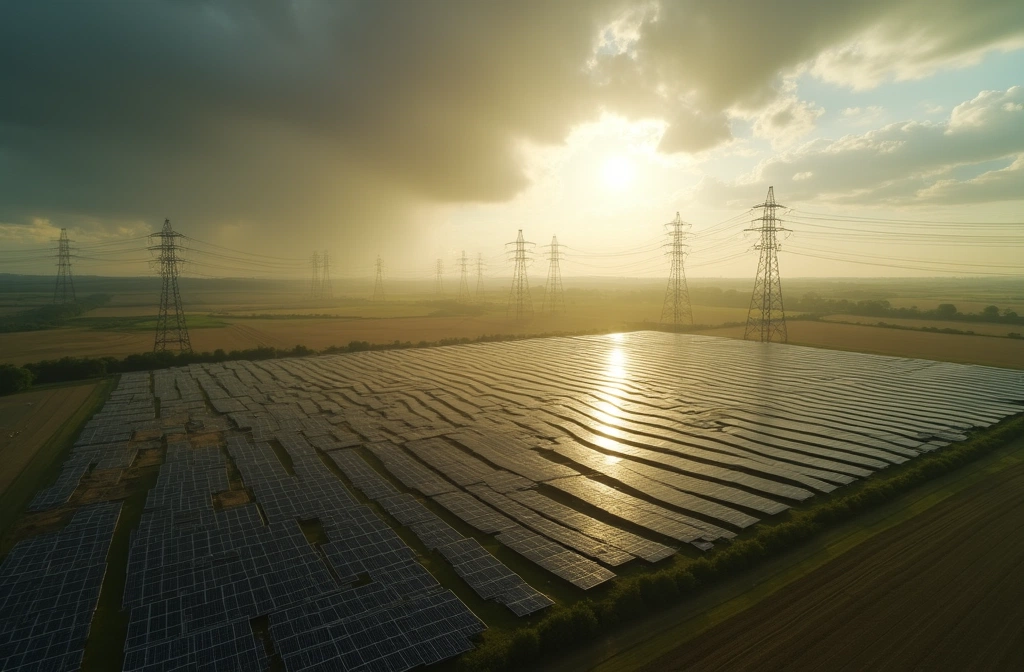
According to reporting from GB News and The Daily Sceptic, blackout concerns are mounting in the UK as solar power generation surges and strains the national electricity grid. The Daily Sceptic reports that solar power is threatening to overwhelm the grid this summer, with gluts of supply creating a risk of blackouts and potentially forcing households and businesses to be asked to consume excess power.
The pressure stems directly from policy acceleration under Energy Secretary Ed Miliband's net-zero push, which has dramatically expanded solar installations across the country. This creates a counterintuitive grid management problem: excess generation during peak daylight hours can destabilize the system as much as insufficient supply.
Why this matters: Grid stability depends on real-time balance between generation and load. Unlike dispatchable power (coal, gas, nuclear), solar output is weather-dependent and concentrated in daylight hours. When generation overwhelms demand, operators face three options—curtail supply (waste), store it (limited capacity exists), or force consumption (demand-side management). GB News and The Daily Sceptic both identify blackout risk as the emerging concern, suggesting grid operators may lack sufficient tools to manage the summer peak.
This is particularly relevant because the UK grid was engineered around traditional baseload generation. Rapid renewable integration without proportional storage and grid modernization creates what engineers call "ramping stress"—sharp transitions between high and low generation that manual or legacy automatic systems struggle to handle.
What to watch: Monitor official statements from National Grid ESO on summer forecasts and any demand-management appeals to consumers. Grid operators typically issue public guidance 4-6 weeks before anticipated strain periods. Watch for announcements regarding interconnector status (cross-border power trade) and battery storage deployment—both are pressure-relief mechanisms. If grid operators begin pre-positioning reserves or issuing early demand warnings before June, that signals confidence in stress forecasts.