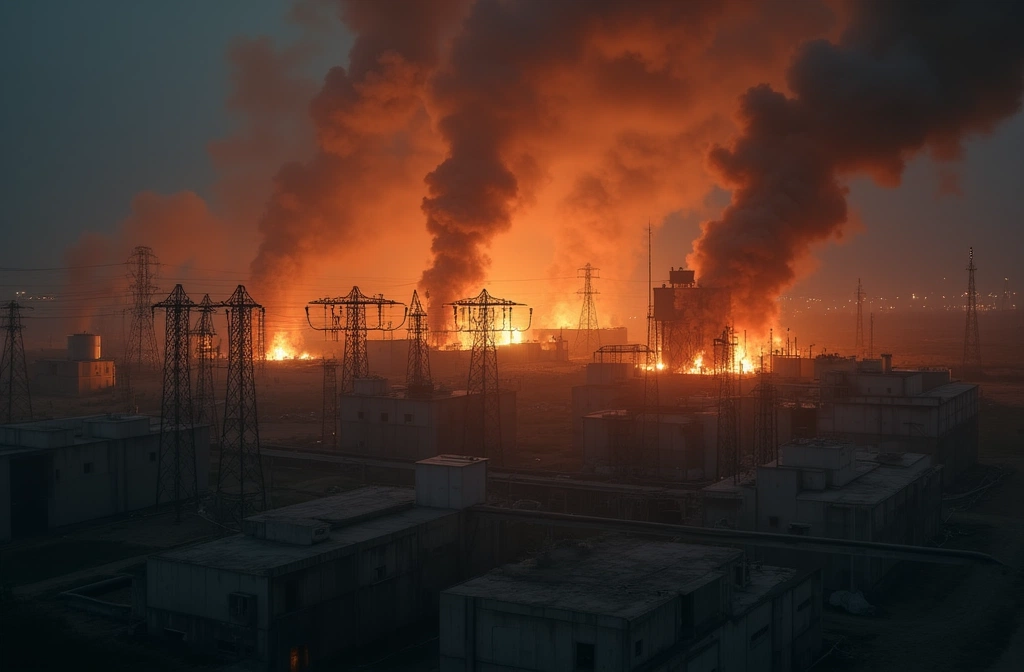
Ukrainian drone and weapons operations are now deliberately targeting critical infrastructure in Russian-controlled Crimea, specifically power and water systems serving civilian populations. Per The New York Times, this shift represents a deliberate strategic choice—moving beyond battlefield operations to strike systems that affect ordinary residents.
The stated objective, according to the Times report, is to pressure the Kremlin into negotiations by bringing direct hardship to Russian civilians. However, Moscow's public response has been notably muted; the Kremlin has not characterized the situation as a crisis warranting immediate action or concessions.
For infrastructure analysts, this development signals an evolution in conflict tactics. When warring parties begin systematically targeting dual-use systems—power grids, water treatment, fuel storage—civilian dependency on those systems becomes a vulnerability. Even limited attacks on generation or distribution nodes can cascade: water treatment fails without power; hospitals and emergency services degrade; supply chains fracture.
The critical variable here is escalation velocity. Ukraine's willingness to strike these targets, combined with Russia's apparent unwillingness to treat them as negotiation-forcing events, suggests neither side currently sees infrastructure attacks as a red line. That equilibrium can shift quickly.
For readers in regions with aging or vulnerable grid infrastructure, this serves as a data point: modern conflicts do not spare civilian systems. The attacks in Crimea are geographically distant but tactically instructive. They demonstrate that infrastructure hardening, distributed backup power, and water storage are not theoretical prepper concerns—they are live operational realities in active conflict zones.
Watch for whether these attacks expand in frequency or sophistication, or whether Russian countermeasures intensify. Either trajectory would signal deeper commitment to infrastructure warfare.
