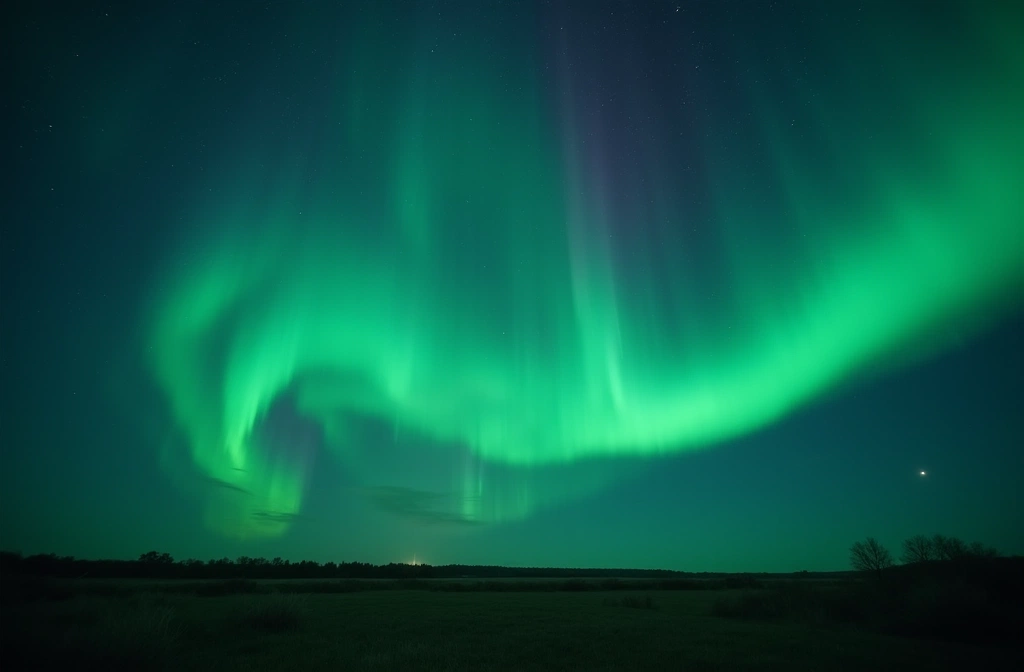
On Mother's Day weekend in May 2024, Earth experienced its most powerful geomagnetic storm in two decades, according to reporting from phys.org. Researchers led by the University of Iowa have now traced the solar activity responsible for the event, which produced auroras that may have been the strongest on record in 500 years.
The key finding: 10 solar outbursts combined to form a gigantic magnetic cloud—a mechanism that matters because it suggests Earth's vulnerability to cascading solar events, not isolated ones. The University of Iowa team's research indicates that understanding how multiple coronal mass ejections (CMEs) can merge into a single, amplified geomagnetic disturbance is essential for grid operators and communications infrastructure planners.
Why this matters now: The 2024 Mother's Day storm occurred during solar cycle 25's rise toward peak activity (expected mid-to-late 2020s). If the same multi-outburst stacking pattern repeats under higher baseline solar activity, the resulting geomagnetic intensity could exceed what grid hardening and protection protocols were designed to withstand. Current transformer saturation, GPS signal degradation, and HF radio blackout duration all correlate directly to storm intensity.
This is not a prediction of imminent threat—it's a data point that refines risk modeling. The University of Iowa research expands the known signature of severe geomagnetic events beyond the single-CME model that has historically dominated forecasting. Infrastructure operators and emergency management agencies should note that composite solar eruptions may produce longer-duration storm phases than traditional severity indices predict.
For preparedness readers: This underscores why baseline power resilience—backup generation capacity, manual switching capability, and local grid islanding procedures—should not assume standard warning windows. Multi-day geomagnetic events with unusual structural characteristics may hit faster and persist longer than historical norms suggest.
