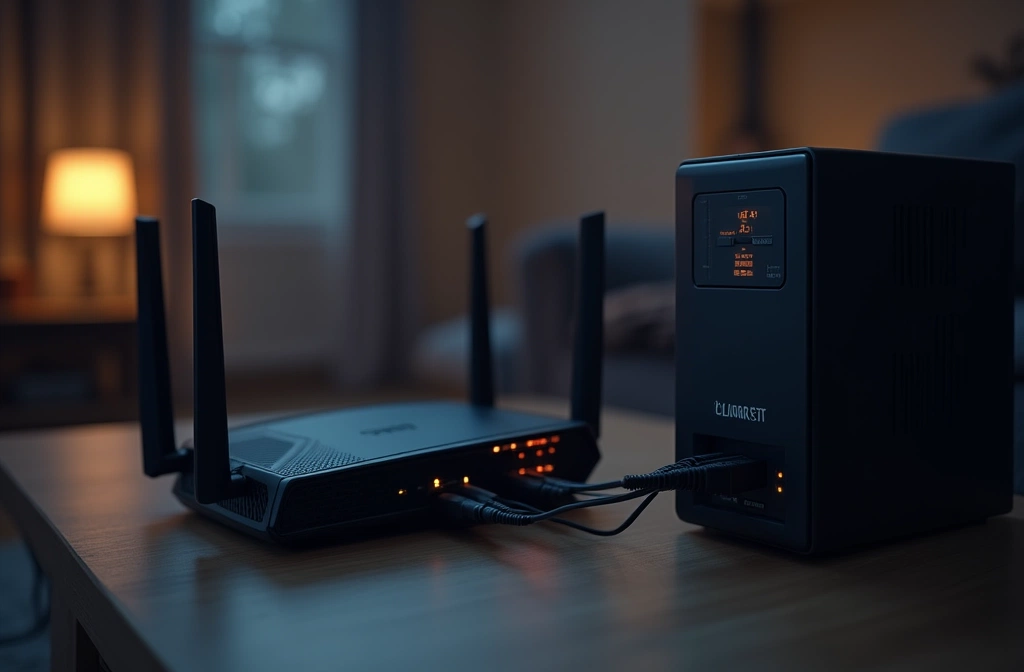
According to MakeUsOf, one individual in an area subject to recurring power cuts solved internet loss during outages by adding a small UPS device to their home network setup. The person described living in a location where blackouts occur regularly—ranging from brief flickering to hour-long complete outages—and found that while they had accepted losing electricity, losing internet connectivity during those failures was unacceptable.
The solution's simplicity is the notable element here: a single small device, deployed at the network level rather than across entire home systems, preserved online access when primary power failed. This approach costs significantly less than whole-home battery backup and requires no grid-side infrastructure changes.
Why this matters: Most residential internet infrastructure—modem, router, network switches—draws power exclusively from the wall. When the grid fails, these devices fail immediately, even if a homeowner has backup power for lights or critical appliances. This creates a cascading loss of communications precisely when connectivity matters most: during emergencies, outages, or grid events requiring real-time information.
The broader infrastructure implication is that household internet resilience currently depends on individual action and cost. There is no mandate, standard, or grid-operator requirement to maintain network uptime during outages. As power distribution becomes more fragmented and outage frequency increases in some regions, this communications gap may widen.
For preparedness-aware households, this signals a practical but overlooked vulnerability: backup power for critical systems often stops at lighting and climate control. Network continuity—which enables access to emergency alerts, remote work, and situational awareness—remains an afterthought.
What to watch: Monitor whether utility providers or equipment manufacturers begin bundling network-grade UPS systems with smart grid deployments, or whether regulatory frameworks start addressing communications resilience as part of grid modernization. Individual adoption rates will indicate whether this remains a niche solution or becomes standard practice.
