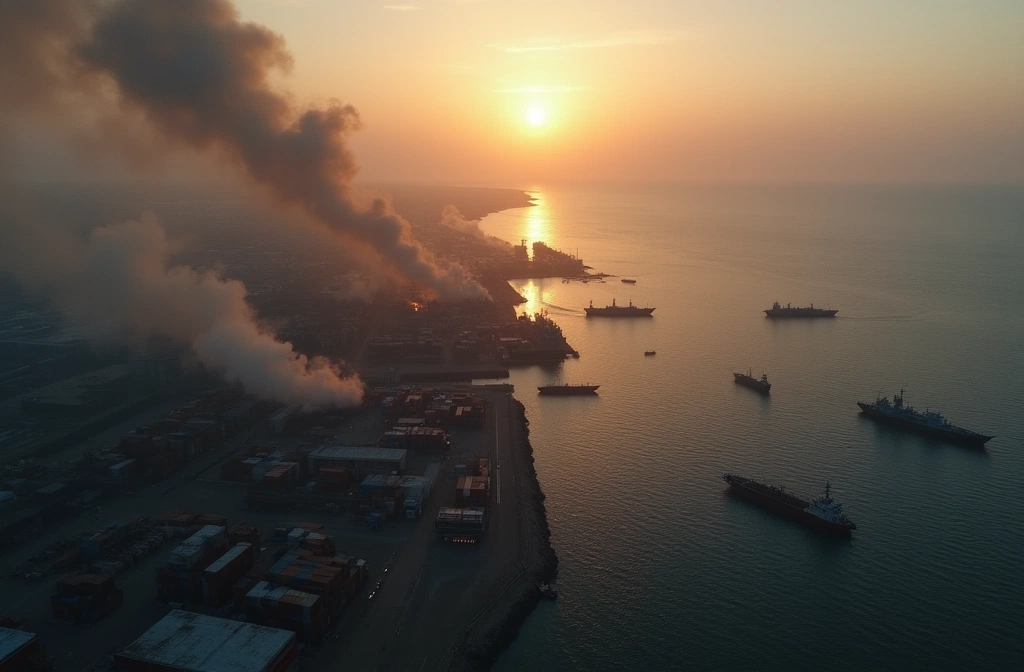
According to reporting from Fox News, the US military conducted strikes targeting Qeshm Port and Bandar Abbas—two vital maritime corridors in the Islamic Republic of Iran. A senior US official confirmed the operations occurred and stressed, per the Fox News account, that the action does not signal a return to full-scale conflict in West Asia.
This matters for preparedness because these ports are critical nodes in global energy transit. Qeshm and Bandar Abbas are situated along shipping lanes that handle significant volumes of regional commerce. Any disruption to port operations could create localized economic friction, but the official characterization suggests the strikes were calibrated to avoid broader escalation.
The framing by the US official—explicitly denying a return to full-scale conflict—is the operative intelligence signal here. It suggests decision-makers are working to contain the operational scope. However, maritime incidents in contested waters carry inherent risk of miscalculation or unintended secondary effects.
For infrastructure-focused readers: watch for any disruption reports from shipping insurers, Suez Canal transit authorities, or energy market volatility over the next 72 hours. A contained operation should show limited spillover; widening insurance premiums or rerouting announcements would signal market perception of elevated risk.
Historically, limited military strikes in this region have not triggered cascading infrastructure failures or grid-level disruption in North America or Europe. The 2019 Abqaiq facility strikes in Saudi Arabia, by contrast, did briefly spike oil prices but resolved within weeks. The key difference then was the target type (energy production) versus today's target profile (port infrastructure). Port strikes typically create localized logistics friction rather than systemic energy shocks.
The intelligence gap remains: official US statements characterize this as contained. Monitor official Iranian response and regional carrier announcements for evidence that confirms or contradicts that assessment.
