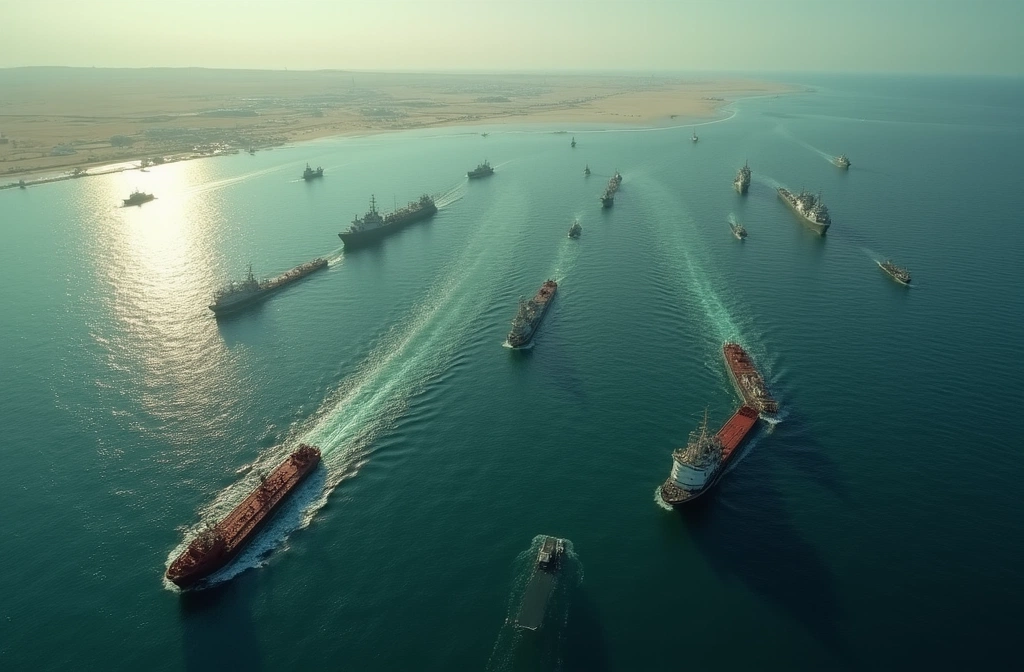
The operational picture is tightening in the Persian Gulf. According to Reuters reporting, the U.S. Navy has stopped 45 commercial vessels as of Friday afternoon in what amounts to a blockade of Iranian crude oil exports. This is not a minor customs enforcement action—it is active interception of merchant traffic.
The escalation is financial as well as military. The U.S. Treasury has announced that any shipper paying tolls to Iran for passage through restricted zones—including payments framed as charitable donations to organizations such as the Iranian Red Crescent Society—faces punitive sanctions exposure. This broadens the net significantly beyond vessel operators to include financial institutions and logistics networks that facilitate payment flows.
Reuters also reports that President Trump has stated dissatisfaction with Iranian proposals on the negotiation side, while a parallel rift is widening between the U.S. and its traditional allies over the handling of the situation.
For infrastructure and supply chain operators, this matters because oil price volatility and shipping insurance costs in the Gulf have direct effects on energy markets, maritime insurance premiums, and fuel availability downstream. For preparedness purposes, the relevant signal is scope creep: blockades that begin as selective enforcement tend to expand. Secondary effects—port congestion, rerouting of traffic, delays in non-sanctioned cargo—are already probable.
Watch the vessel count. If the number of stopped ships grows materially in the coming weeks, or if the Treasury broadens its sanctions language to affect non-Iranian entities more directly, you're watching escalation, not de-escalation. Similarly, monitor whether allied nations (particularly those with significant maritime or trading interests in the Gulf) begin to publicly distance themselves further or take countermeasures. Reuters has already flagged an "impasse" in allied coordination—that fracturing is the structural vulnerability to watch.
