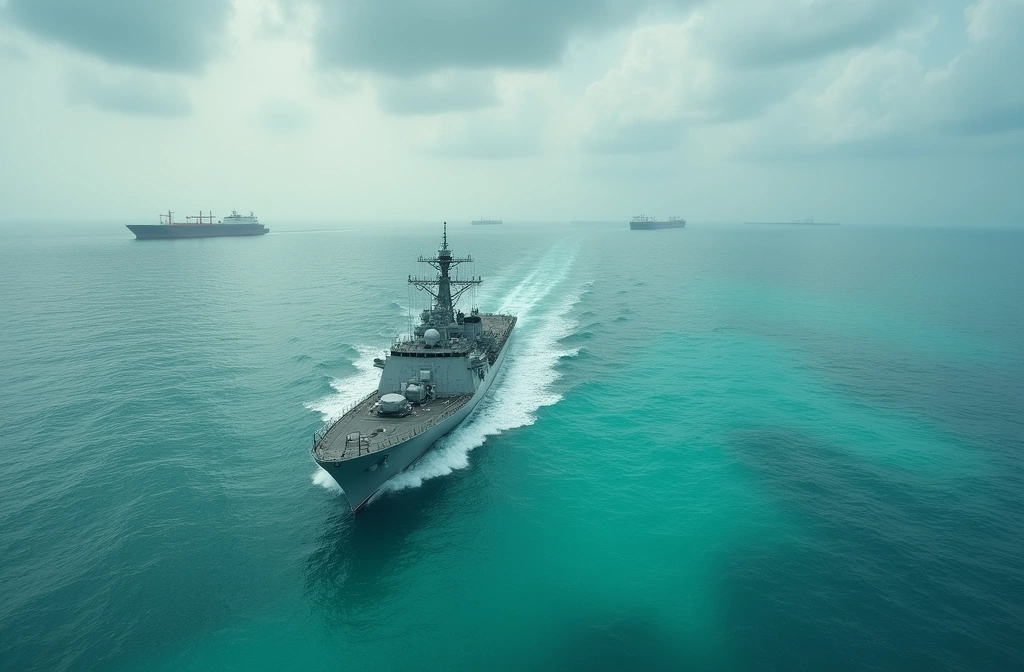
According to The New York Times, the U.S. Navy has deployed more than a dozen warships to enforce a blockade on all vessels from all nations entering or leaving coastal areas or ports in Iran. Central Command confirmed that nine vessels had complied with directions to turn around and re-enter Iranian ports or coastal areas, though specific vessel details were not disclosed. Kpler, which tracks ships using satellite data and monitors vessels with falsified location signals, identified two additional ships with Iran links that are subject to U.S. sanctions and appear to be affected by the enforcement action.
Why this matters: The Strait of Hormuz handles roughly one-third of global seaborne oil trade. Any sustained maritime enforcement that disrupts traffic flow through this corridor creates direct economic pressure on energy markets and supply chains. Even temporary vessel diversions can signal prolonged enforcement intent—and market participants respond by adjusting shipping routes, insurance premiums, and commodity pricing.
For infrastructure and preparedness planning, sustained blockades historically correlate with:
• Elevated fuel costs and volatile spot pricing • Shipping delays affecting just-in-time inventory systems • Potential supply chain friction in sectors dependent on Iranian materials or re-export goods • Increased insurance and shipping costs that cascade into consumer prices
The fact that nine vessels complied suggests the blockade carries material enforcement credibility. However, this is a single data point from one source. What to watch: Kpler and other maritime tracking services should be monitored for patterns—sustained compliance, escalating vessel diversions, or evidence of alternative routing. If blockade enforcement widens beyond Iran-linked vessels to include broader traffic, that signals a material shift in Strait operations and would warrant immediate supply chain attention.
