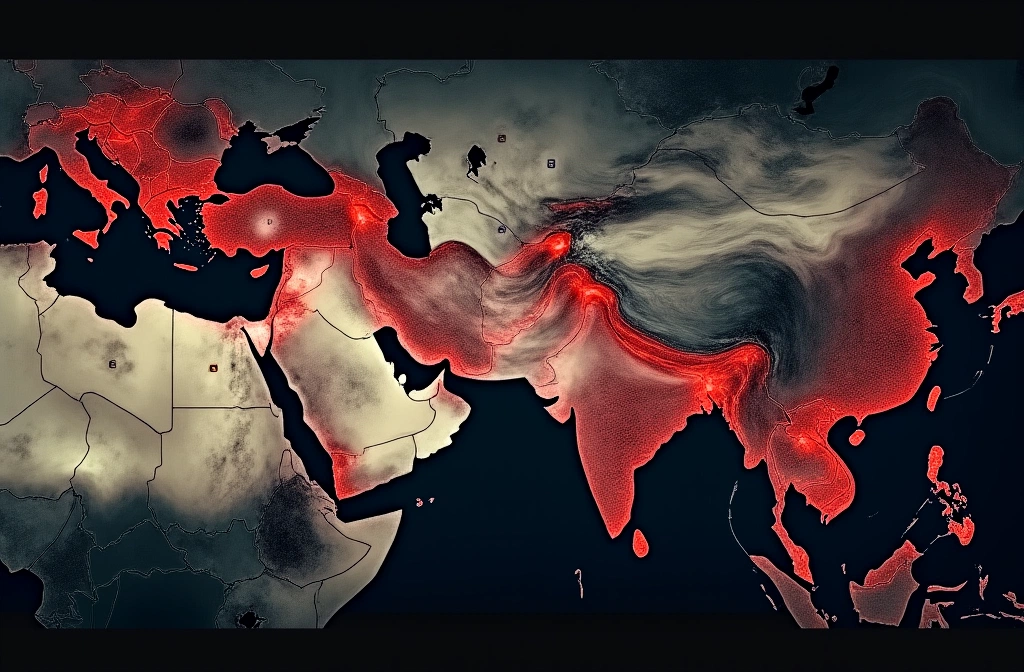
According to CNBC and The Hill, the U.S. has sanctioned 11 entities and three individuals based in Iran, China, Belarus, and the United Arab Emirates. The sources indicate these targets were involved in supporting Iranian activities, though specific operational details are not yet public.
Why this matters for preparedness:
Sanctions targeting Iran's international supply chains and financial networks typically precede or accompany broader regional tension. When sanctioned entities are located across multiple jurisdictions—particularly China and the UAE—it suggests the U.S. is attempting to constrain Iran's access to dual-use technologies, financing, and logistics networks that span continents.
For infrastructure and communications readiness, this is a yellow flag rather than red. Escalating sanctions regimes don't directly degrade grid stability or communications systems in the continental U.S., but they do increase the probability of Iranian asymmetric responses (cyber operations, proxy activity in the Gulf) and corresponding allied military posturing in strategically sensitive zones—the Strait of Hormuz among them.
The Hill's reference to potential sanctions relief and the Strait of Hormuz blockade suggests these moves may be part of a broader negotiation framework, though the exact contours are not yet clarified in available reporting.
What to watch next:
— Iranian response timelines: Historically, Tehran either absorbs sanctions quietly or responds within weeks through proxy activity or lower-level cyber operations.
— Messaging from China and UAE officials: If these countries push back diplomatically or refuse enforcement, it signals weaker U.S. leverage and possible Iranian workarounds.
— Energy markets and shipping routes: Sustained sanctions tension often translates to Strait of Hormuz risk premiums. Watch for insurance costs on Gulf transit and crude volatility.
For most readers, this does not require immediate action. Standard preparedness—backup power, fuel storage, cash reserves—remains the baseline. If you monitor energy markets or regional geopolitics professionally, add this to your tracking queue.
