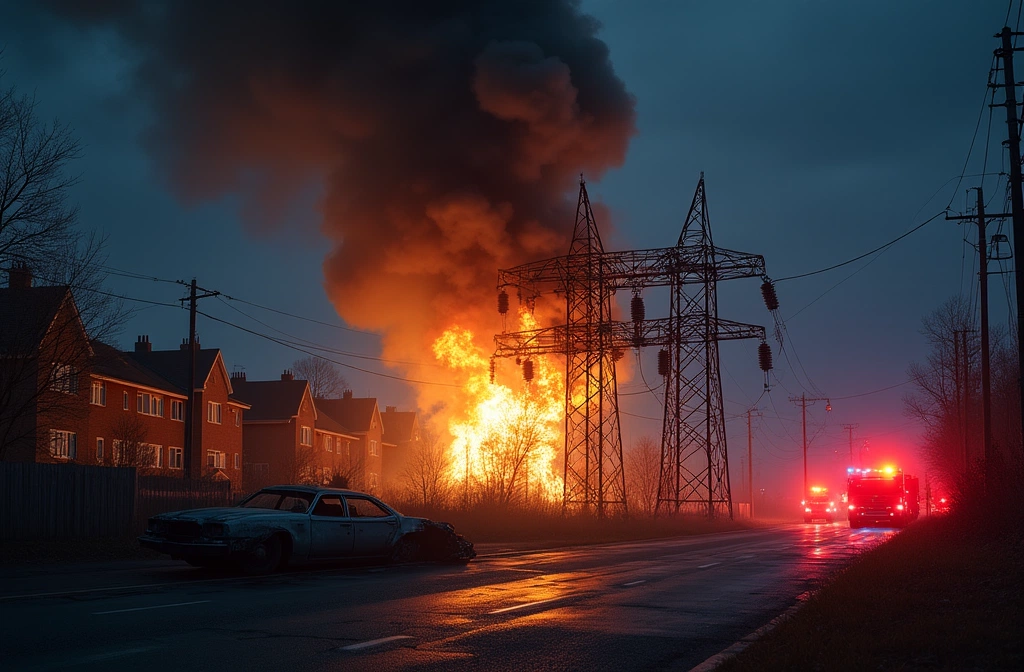
According to WFMZ, a vehicle struck a utility pole in the Easton area of Northampton County, Pennsylvania, triggering a transformer fire and severing power to hundreds of residents. The collision occurred just before 5:30 p.m. on April 18, 2026.
This event is instructive for infrastructure-aware readers for a specific reason: it demonstrates the fragility of single-point failures in electrical distribution networks. A utility pole is not redundant infrastructure. When one fails catastrophically—whether by vehicle impact, weather, or age—the transformer it supports goes offline with it, taking service to an entire neighborhood or district offline immediately.
The transformer fire is the secondary concern here. Fires in energized electrical equipment can spread to nearby structures, complicate response operations, and create hazmat conditions that delay restoration. Recovery time depends on transformer availability, crew dispatch capacity, and damage assessment—factors that may vary widely.
For preparedness purposes, this is a reminder that grid outages in your area may originate from causes that have nothing to do with weather, cybersecurity, or solar activity. Vehicular accidents are routine. When they intersect with critical infrastructure, the impact is binary: either the pole holds, or it doesn't. There is no graceful degradation.
The Northampton County incident affected a limited geography and appears to have occurred during daylight hours (late afternoon), which typically allows faster response and reduces immediate public safety strain compared to outages during darkness or severe weather. However, the underlying vulnerability—that one vehicle can disable service to hundreds—remains.
Watch for utility company statements on restoration timelines and whether backup feeders or manual rerouting reduced the outage footprint. These details may indicate whether the grid in this area has been hardened against single-point failures or remains dependent on sequential infrastructure.