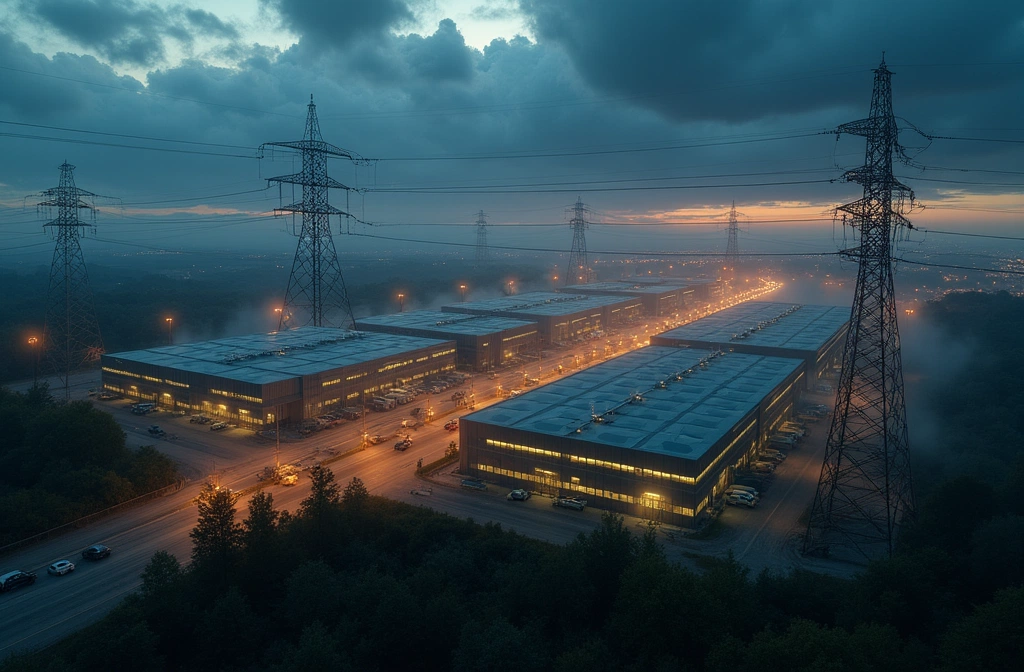
According to AOL reporting, Loudoun County officials have identified a critical infrastructure challenge: the concentration of more than 200 data centers in the region is creating electricity demand that existing grid infrastructure was not designed to handle. Officials characterize this as "challenges unlike anything utilities have encountered before."
The significance here is structural, not speculative. Data centers consume enormous, continuous power loads. When demand concentrates in a single region serviced by aging transmission and distribution infrastructure, the grid loses flexibility. Voltage fluctuations—the flickering mentioned in reporting—are a leading indicator of stress on substations and transmission lines. They precede cascading outages.
This is not a Virginia-only problem. Data center buildout is accelerating nationwide as AI, cloud computing, and enterprise applications scale. Other regions with similar geographic concentrations—Northern California, Northern Virginia, the Pacific Northwest—face comparable risk. The difference is infrastructure age and density. Loudoun County's grid was built for a different era of demand.
Why it matters: Even brief power interruptions disrupt more than just electricity delivery. Data centers themselves require UPS (uninterruptible power supply) systems and backup generation. If demand exceeds grid capacity, even a few seconds of brown-out can cascade into facility shutdowns, data loss, and service interruptions affecting millions of users. Financial services, cloud platforms, and communications infrastructure are all dependent on data center uptime.
The practical risk is not dramatic overnight failure—it's rolling stress, increasing frequency of minor outages, and the slow erosion of grid margin. This suggests utilities in high-density data center regions need immediate infrastructure assessment and load-management planning.
