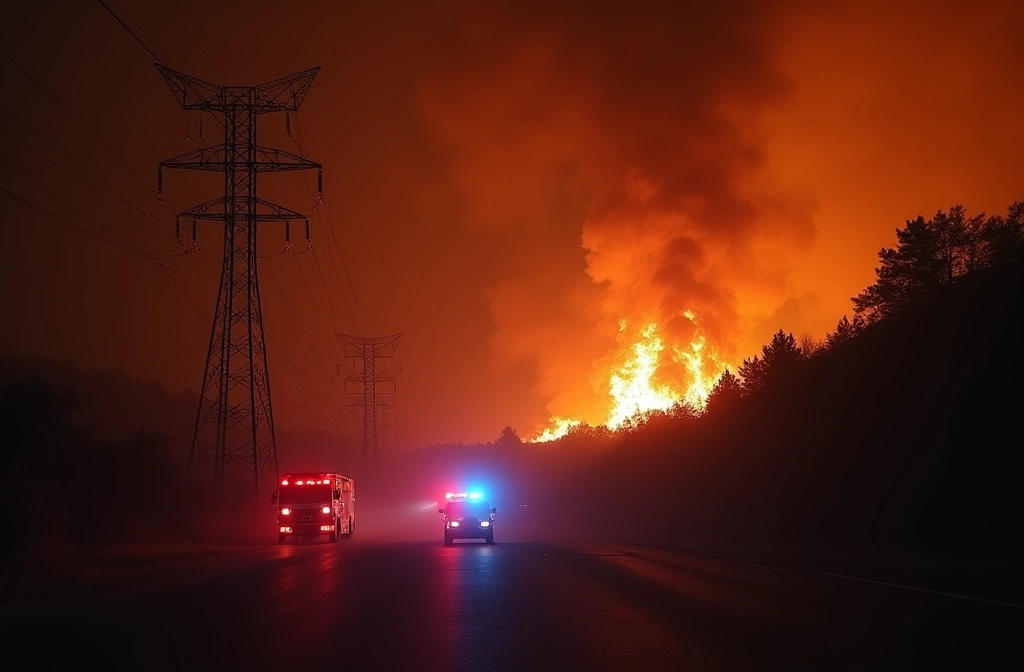
Washington State has declared a state of emergency in response to rapidly escalating wildfire conditions affecting Spokane County. The trigger: a rare 'Particularly Dangerous Situation' Red Flag Warning—the highest alert level issued by fire authorities—combined with hurricane-force winds and ongoing severe drought conditions.
The event is producing compound stressors on critical infrastructure. Power outages are occurring in the evacuation zones, degrading situational awareness and limiting communications for residents attempting to coordinate relocation. The National Guard deployment indicates state-level recognition that local emergency response resources are being overwhelmed by scale and speed.
For preparedness readers, this event underscores three interconnected vulnerabilities:
Grid dependency during forced dispersal. Mass evacuations concentrate demand on fuel infrastructure, communications networks, and roads at exactly the moment when distributed power loss reduces coordination capability. Residents without offline navigation, fuel reserves, or go-bags assembled in advance face friction that could delay exit windows.
Cascading weather-driven events. Hurricane-force winds during extreme drought create conditions where fire propagation outpaces suppression—a scenario that stresses both local mutual aid networks and mutual aid networks across state lines as resources are requested from neighboring regions.
Early-season severity. A "Particularly Dangerous Situation" warning in early August suggests fire season intensity is front-loading, not back-loading. This may compress the window for seasonal preparedness into a narrower operational window than historical patterns suggest.
The National Guard activation is noteworthy not as evidence of imminent collapse, but as a clear signal that civilian emergency management resources have reached practical ceiling in this geography during this event.
What to watch: Track whether power restoration timelines extend beyond 72 hours, whether evacuation zones expand, and whether mutual aid requests move to neighboring states. These indicators will clarify whether this remains a regional event or signals systemic strain across western grid and emergency response capacity.
