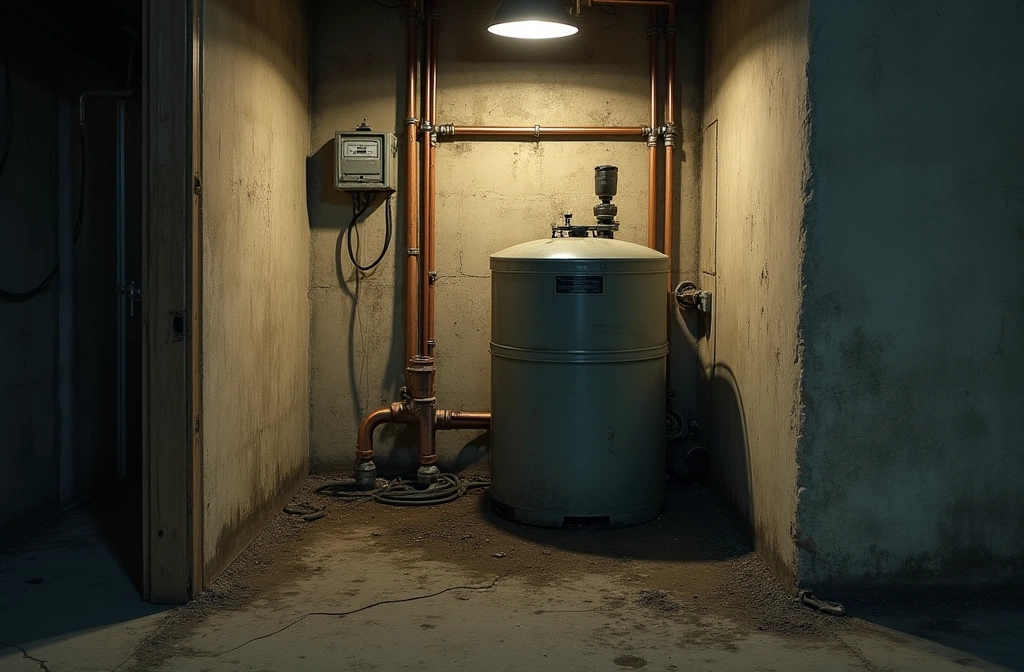
Here's the operational reality: most American homes with private wells have zero water capability once the grid goes dark. The Savvy Survivalist confirms that residential well pumps are entirely electricity-dependent. You do get a temporary buffer—water stored in the pressure tank will flow for a short window—but that's it. Once that supply exhausts, your faucets, toilets, and showers become inert.
This matters because it exposes a critical infrastructure vulnerability that most well-dependent households don't account for in their planning. Unlike municipal systems (which have some backup capacity and gravity-fed redundancy), private wells are single-point-of-failure systems. A regional blackout lasting 12 hours or longer creates an immediate water access crisis for anyone outside municipal service areas.
The pressure tank reserve is negligible for realistic preparedness math. A typical household uses 80-100 gallons daily. A standard pressure tank holds 20-80 gallons total. Do the arithmetic: you're looking at hours of water access, not days.
This cascades into sanitation, hygiene, and health issues faster than most people anticipate. Toilets can't flush. Hand washing becomes impossible. Livestock or garden irrigation halts. For anyone in rural areas or on well systems—roughly 15% of the US population—this isn't theoretical.
The preparedness implication is straightforward: well-dependent households need redundancy that doesn't require grid power. Hand pumps, stored water reserves, or backup generators with sufficient fuel capacity are the only practical mitigation. Pressure tanks alone don't count as backup.
