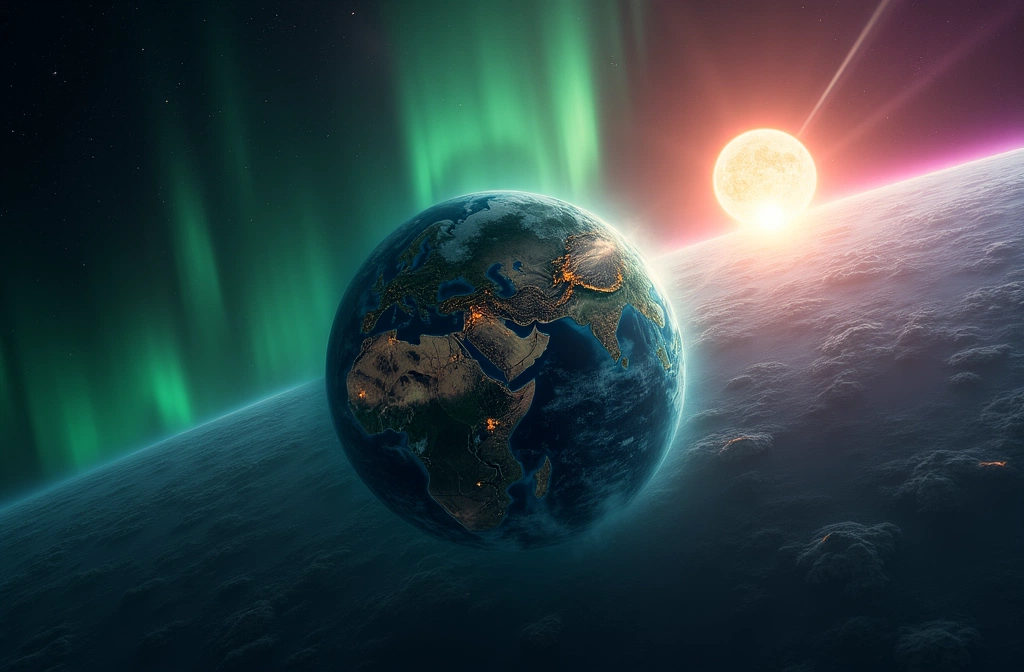
According to Zamin.uz, a magnetic storm began on Earth after a plasma cloud from an X-class solar flare made contact on the evening of June 6, 2026. The report cites data confirming the impact, though the source article does not specify Kp index severity, duration forecast, or affected regions.
X-class flares represent the highest classification of solar eruptions. When their associated plasma clouds reach Earth's magnetosphere, they can compress the magnetic field and trigger geomagnetic storms capable of affecting power grid stability, high-frequency radio communications, and satellite operations — particularly systems operating at high latitudes.
What matters now: This event is classified as low severity based on available reporting, but that assessment may shift as more detailed space weather data becomes public. The critical variable is duration and whether secondary disturbances follow. Magnetic storms can cascade — a strong initial impact sometimes precedes secondary pulses over 24–48 hours.
For infrastructure operators and preparedness-minded individuals, the immediate watch window is straightforward: grid operators will be monitoring transformer loading and reactive power demand. If you rely on GPS-dependent systems (agriculture, logistics, utilities), expect possible accuracy degradation. Satellite communications may experience temporary outages or signal loss, particularly on polar routes.
Historical context: The Carrington Event of 1859 began with observable solar activity visible to naked eye, followed by a geomagnetic storm that induced currents in telegraph wires severe enough to cause fires. Modern power grids are far more extensive and tightly integrated than telegraph networks, but also far more vulnerable to induced currents at scale. A comparable event today would trigger transformer damage and cascading blackouts across continental regions. This 2026 event, while confirmed X-class, remains in the low-severity range — but it confirms that space weather risk is not historical; it is active and recurrent.
