If you've been reading smart water box reviews and complaints before pulling the trigger on a $39 purchase, you're doing exactly what a disciplined buyer should. Most of what you'll find online falls into one of two extremes — breathless vendor testimonials or reflexive dismissal from people who've never seriously evaluated atmospheric water generation. Neither is useful. I've spent years advising clients on infrastructure resilience, and AWG technology is a legitimate field grounded in real physics. The question worth asking isn't whether this technology works — it does, in controlled conditions — but whether the Smart Water Box guide gives you what you need to deploy it effectively and whether the performance claims hold up under real-world constraints. That's what this review addresses.
What the Smart Water Box Actually Is
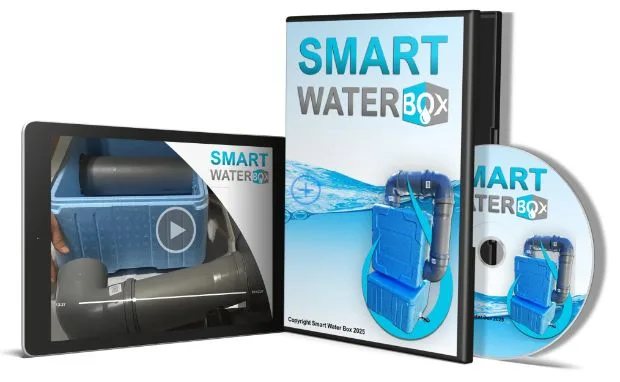
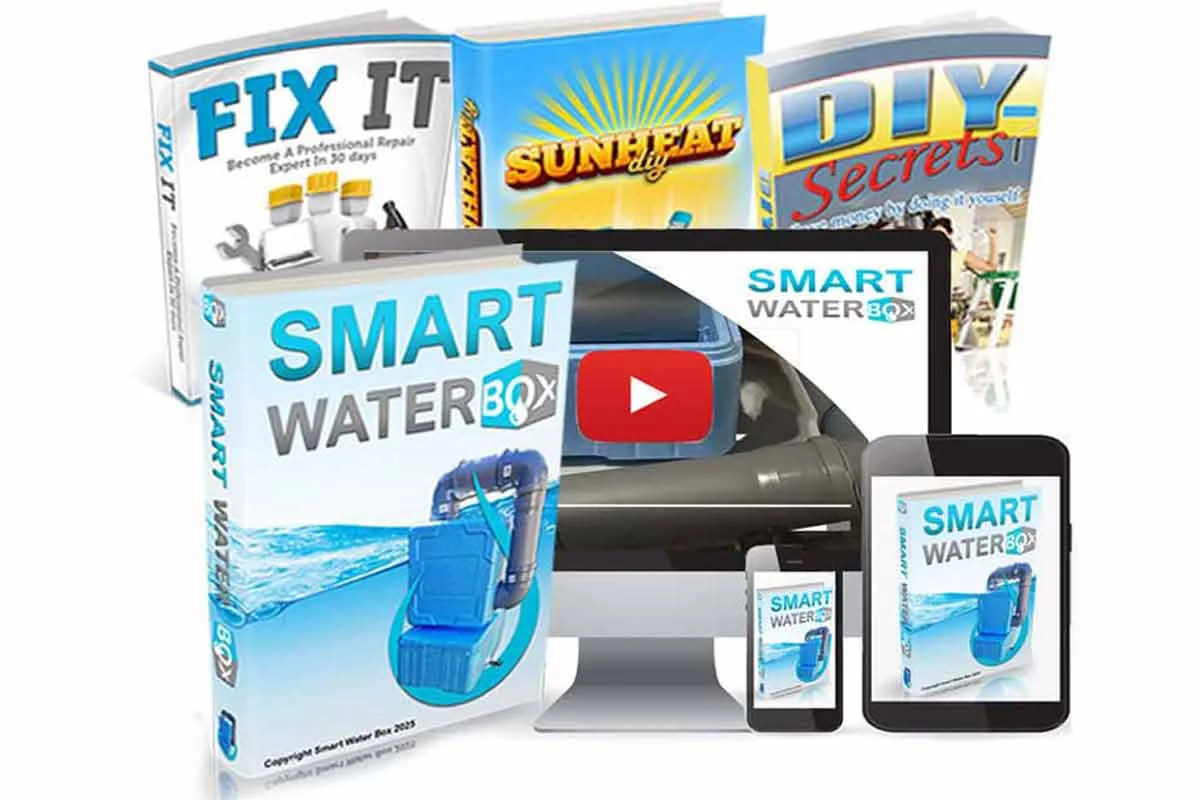
Here's what most people get wrong about this product before they buy: the Smart Water Box is not a manufactured device you unbox and plug in. It's a build-it-yourself guide — a step-by-step instructional system that walks you through constructing an atmospheric water generation unit from commonly available components. For $39, you receive the main build guide plus three bonuses: the SunHeat DIY Solar Water Heating Blueprint (how to build a solar hot water system without gas or electricity), Home DIY Secrets (energy-saving hacks and utility bill reduction), and Lifetime Support Access — direct troubleshooting help from the team if you run into issues during your build.
This distinction matters enormously. Buyers expecting a finished appliance will be disappointed — and that gap between expectation and reality is the single most recurring thread in legitimate complaints about this product. The vendor's marketing leans heavily on images and language that imply a packaged solution. It isn't. What you're purchasing is the knowledge to build one.
The guide targets four primary audiences: families in water-scarce regions, off-grid homesteaders, preppers building redundant water supply chains, and households looking to reduce dependence on municipal utilities. The positioning around military and space-program technology refers accurately to AWG's use in submarines and aerospace life support — though applying that lineage to a DIY home build requires some honest qualification, which I'll cover below.
At $39, the price point is low enough that the financial risk is minimal. The real cost question is what you'll spend on components once you've read the guide — and the source materials are conspicuously silent on that figure.

How the Technology Actually Works
Atmospheric water generation is not marketing. It's thermodynamics.
This isn't opinion — it's physics. When humid air contacts a surface cooled below the dew point, water vapor condenses into liquid. That's the same process that fogs your bathroom mirror and beads water on a cold glass. AWG systems formalize this through a refrigeration cycle: a heat exchanger or thermoelectric cooler pulls ambient air across a chilled surface, condenses the moisture, and channels the collected water through a filtration stage before it's drinkable. Commercial AWG units — made by companies like Watergen, Atmospheric Water Solutions, and EcoloBlue — operate on exactly this principle and are deployed in military field operations and disaster relief contexts.
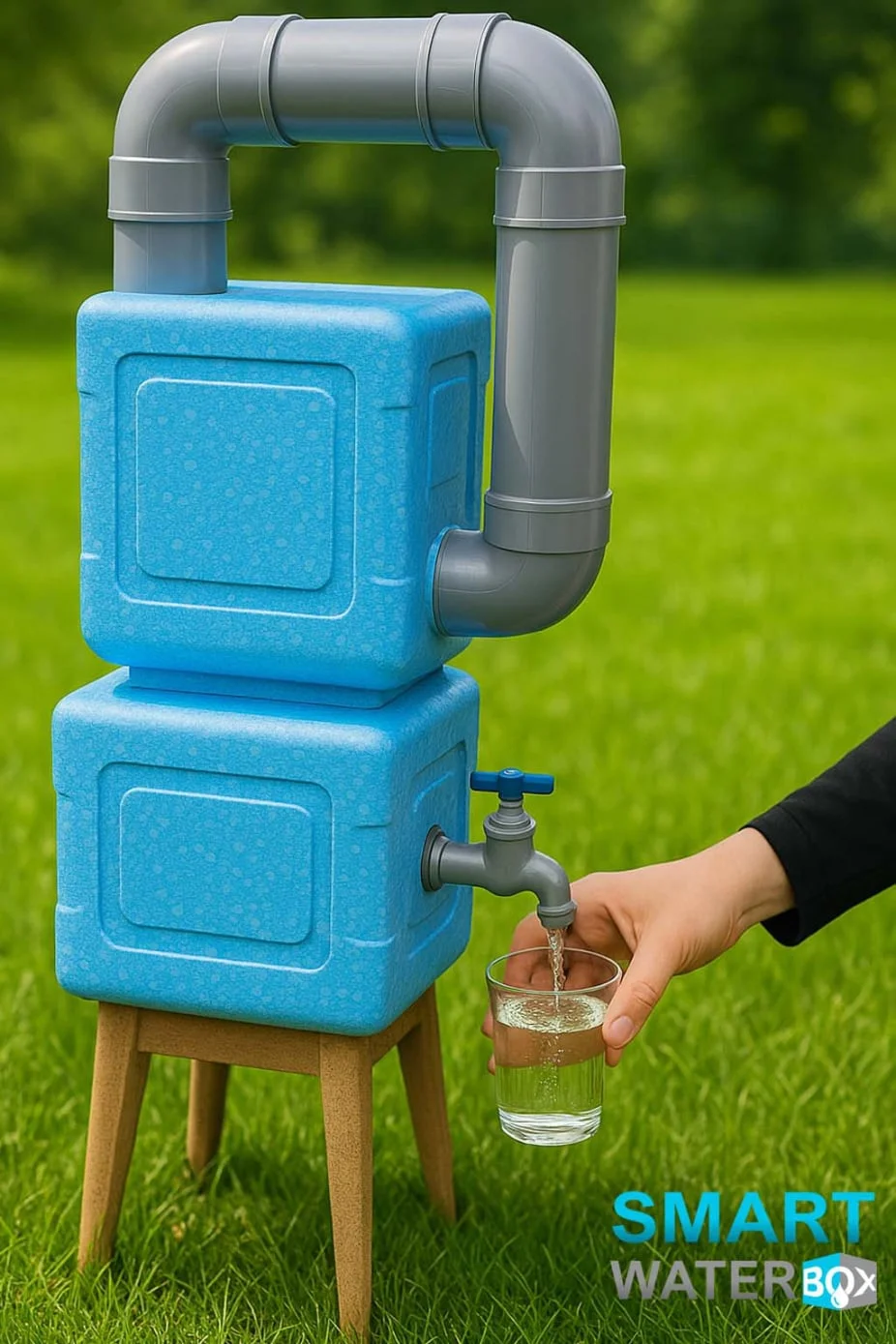
The Smart Water Box methodology follows the same core mechanism. Based on the described approach, the system uses a cooling-condensation loop paired with filtration. I'd urge careful reading of the claim of up to 40 gallons per day. That figure represents a theoretical ceiling, not a guaranteed output. AWG yield scales directly with two variables: ambient humidity and ambient temperature. At 80% relative humidity and 86°F, a well-built unit can approach those numbers. At 30% relative humidity — the kind you'd find in desert climates or during a dry inland winter — output drops sharply. Independent testing on comparable DIY AWG builds at 40–50% humidity typically yields 6–12 gallons per day, not 40. The 40-gallon figure assumes near-tropical conditions most U.S. buyers will never see.
The guide's claim that the system "works in any climate, including dry regions" deserves scrutiny. Technically true in the sense that condensation occurs at any humidity above zero — but practically misleading, since output in dry climates may be measured in quarts, not gallons. That's a non-negotiable piece of context any honest review must flag.
Who This Is For — and Who It Isn't
The single most important thing I tell every client evaluating a preparedness tool is this: match the solution to your actual threat model, not the marketing narrative. The Smart Water Box guide has genuine value for a specific set of buyers. It has real limitations for others.
This guide makes sense if you:
- Live in a region with consistent humidity above 50–60% — coastal areas, the Southeast U.S., Gulf states, Pacific Northwest
- Are already comfortable with basic mechanical or electrical DIY work, or are willing to learn
- Want a redundant, infrastructure-independent water source for emergencies rather than a primary daily supply
- Are building an off-grid homestead and water collection is one layer in a multi-source strategy
- Have $39 to evaluate whether AWG is worth a larger investment in a commercial unit
This guide is the wrong fit if you:
- Live in arid or semi-arid climates — desert Southwest, high-altitude inland regions — and expect 40 gallons per day
- Have no interest in building anything and want a turnkey solution
- Are evaluating this as your sole emergency water strategy without backup options
- Expect third-party certification or laboratory-verified output data — none exists for this specific product
- Need immediate water security; build time and component sourcing take time
The counterintuitive point most beginners miss: atmospheric water generation is most effective precisely when you'd least expect to need emergency water — in humid, temperate conditions. The crisis scenarios where water supply is most at risk (extreme drought, infrastructure collapse in arid regions) are also where AWG performs worst. That's not a reason to dismiss the technology; it's a reason to layer it with other strategies.
What I'd Change
Here's the part most guides miss: a credible review has to tell you what's weak, not just what works. In my assessment, the Smart Water Box guide has three meaningful gaps.
First, no bill of materials with pricing. The guide describes components as "common and inexpensive," but that framing does no work for a buyer trying to budget a build. Real component costs for a functional AWG unit break down roughly like this: a thermoelectric or Peltier module runs $40–80, a small heat exchanger $30–60, basic filtration media $25–50, and housing materials $30–80 depending on what you have on hand. Budget $150–$300 for a modest-output build — more if you're sourcing a compressor-based system capable of higher daily yield. The $39 guide price is not the total cost of ownership, and the marketing underplays this.
Second, no electricity consumption data. AWG units run on power — continuously. A refrigeration-based system capable of producing meaningful water output will draw significant wattage. For off-grid buyers relying on solar or battery banks, this is a critical design constraint. The guide, based on available information, doesn't address power load planning in detail.
Third, maintenance requirements are underspecified. Filtration media degrades. Condensation surfaces can grow biofilm. Any system producing drinking water requires a maintenance schedule. A guide serious about safety should include explicit protocols — and buyer complaints in this category tend to cluster around systems that produced water but without adequate treatment assurance.
None of these gaps make the guide worthless. They make it incomplete — and they're exactly what a buyer should ask about before committing to a build.
How It Compares to Alternatives
At $39, the Smart Water Box isn't competing with commercial AWG appliances. It's competing with other DIY knowledge products. That's the right frame.
Commercial AWG units from Watergen or EcoloBlue start around $1,500 for residential scale and climb well past $10,000 for high-output systems. They come with engineering validation, certifications, and service contracts. If your budget and situation support that, it's a different category entirely — and probably the better choice for a primary water supply.
At the other end, rainwater harvesting guides and gravity-fed filtration systems (like a Berkey-based setup fed from a storage tank) cost less to implement overall and have more predictable output data. For preppers in humid climates, a 500-gallon rainwater collection system paired with quality filtration may deliver more reliable emergency water per dollar than a DIY AWG build.
Where the Smart Water Box carves a legitimate niche: it's a low-cost entry point for evaluating whether AWG is worth pursuing further, and a useful educational resource for understanding the technology before committing to a larger system. Think of the $39 as a feasibility study, not a finished solution.
The approach here is sound enough that someone in the right geographic and skill context could build a functional supplemental water source from these instructions. The claims need to be read with calibrated expectations — particularly the 40-gallon figure, which is a ceiling, not a floor.
Verdict
The Smart Water Box guide delivers real educational value on a legitimate technology at a price that makes the risk negligible. It is not a finished product, not a certified system, and not a solution for arid climates expecting maximum output. If you're in a humid region, comfortable with a DIY build, and treating this as one layer in a broader water resilience strategy — the $39 is reasonable. If you're expecting a plug-and-play appliance or planning to rely on this as your sole water source in a crisis, look elsewhere first.

I'd recommend it specifically as a first-step evaluation tool — buy the guide, assess the build complexity against your actual skills and local humidity, then decide whether to invest in components or step up to a commercial unit. The 60-day money-back guarantee removes the financial risk entirely: if the build complexity or your local climate makes this the wrong fit, you're not out anything. The Smart Water Box guide is $39 with a 60-day money-back guarantee — if the build complexity or your local climate makes this the wrong fit, you pay nothing. Check current availability and access the guide here
Most people think water preparedness is about storage. The more accurate frame is this: storage is a buffer, but production is resilience. A system that makes water from the air — even imperfectly — changes your threat exposure in ways that a 55-gallon drum simply cannot.