

Does Honey Go Bad? How Long It Lasts and How to Tell

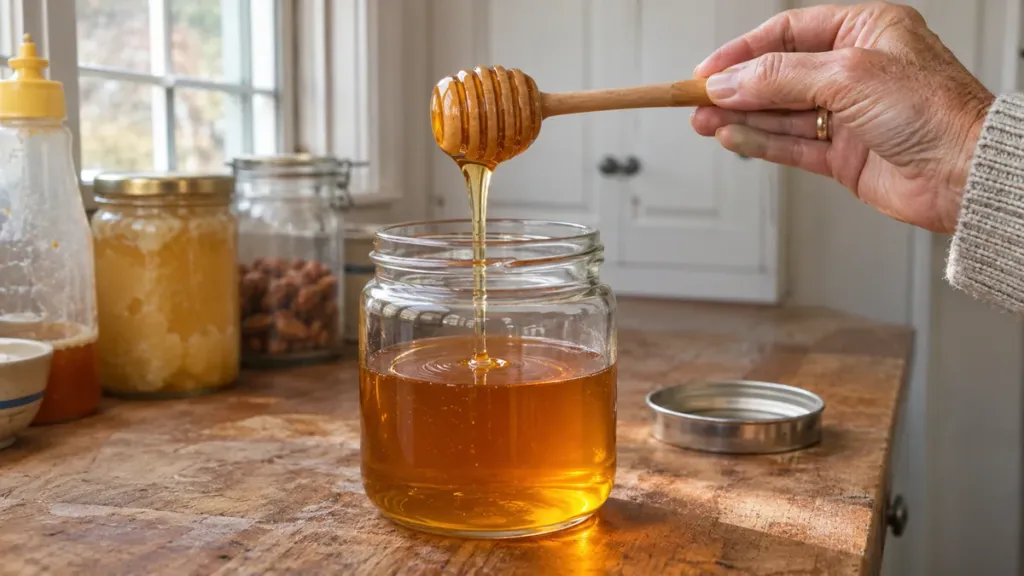
No. With the lid on and water kept out, honey is safe to eat indefinitely, according to Mississippi State University Extension. The date on the jar is a sell-by or best-by date, not an expiration date, and USDA gives honey about 2 years for best quality. If yours has gone cloudy or hard, it has crystallized, and a bowl of warm water fixes that.
We found ours behind the cornstarch, the way you find most things in a pantry. A squeeze bear of clover honey with a sell-by date from three summers ago, gone pale and stiff. It was halfway to the trash can before somebody said, “Wait, doesn’t honey last forever?” So we looked it up properly, from people who study food for a living. The bear lived.
Why doesn’t honey spoil?
Germs need water, and honey barely has any. Bees fan the nectar with their wings until most of its water is gone, so very little can grow in what’s left. Honey is also acidic, with a pH of about 3 to 4.5 (plain water is 7), and most germs can’t grow in that. On top of that, bees add an enzyme that makes a tiny bit of hydrogen peroxide, the same stuff in the brown bottle under your sink (Smithsonian).
That’s why archaeologists have found honey pots in ancient Egyptian tombs with the honey still preserved. Nobody is asking you to taste a pharaoh’s breakfast. But it’s a very good sign for the jar from three summers ago.
Water is the one thing honey can’t handle. Leave the jar open in a steamy kitchen, or drip a wet spoon into it, and it can start to ferment. Keep the lid on and the water out, and the honey will outlast the label.
Is crystallized honey bad?
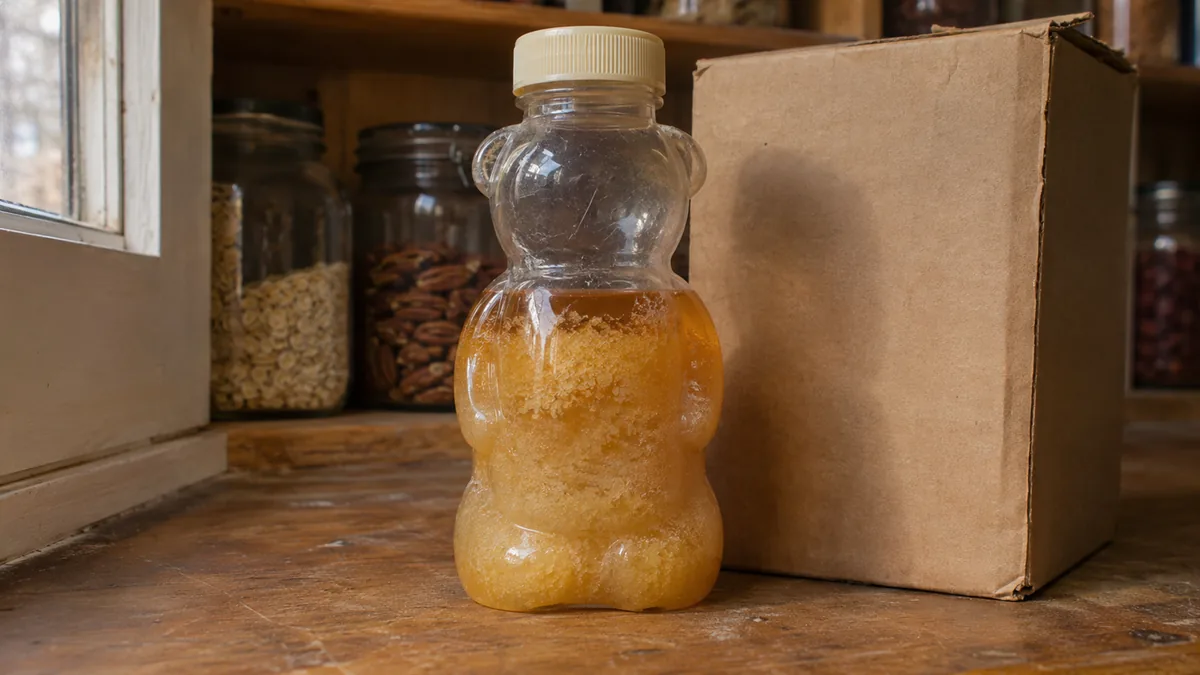
No. Cloudy honey is honey that has started to crystallize, and crystals are not spoilage (Mississippi State University Extension). It happens faster when honey gets cold, which is why the fridge isn’t a good spot for it.
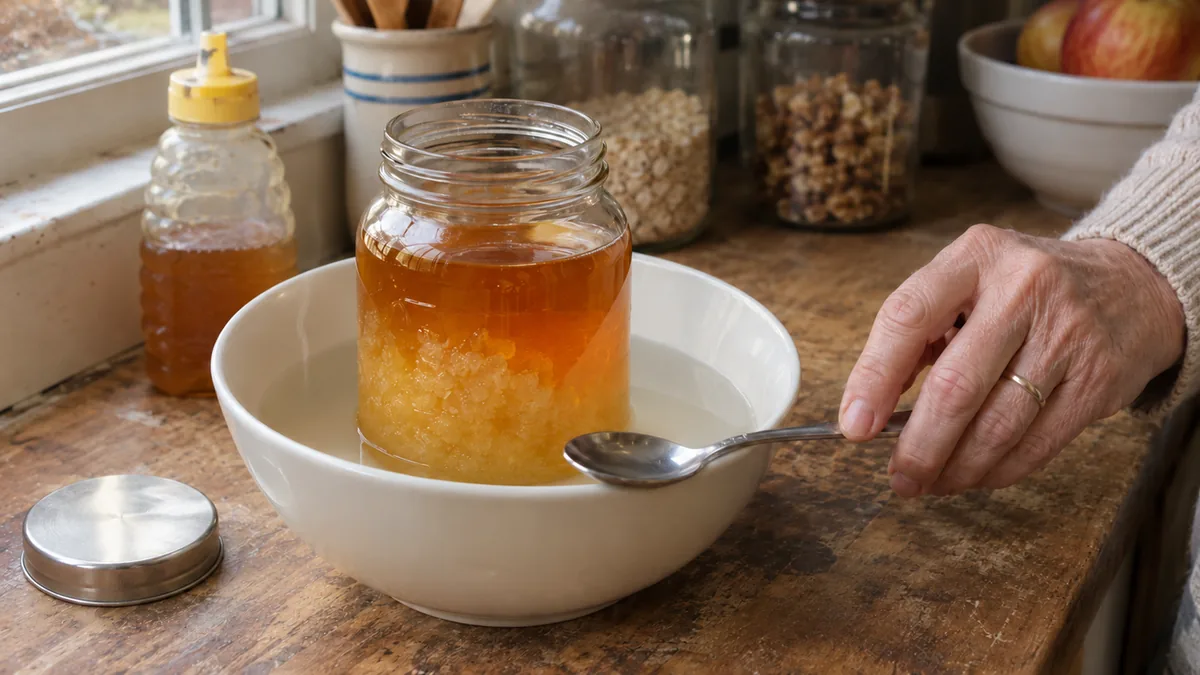
The fix: stand the jar or bottle in a bowl of warm water. Every few minutes, open it and stir, or give a squeeze bottle a good squish, until the crystals melt. Keep the water warm, not boiling, and skip the microwave for plastic. Our bear needed a couple of refills of warm tap water. A big tub takes longer, so give it time instead of more heat.
Put this plan on paper
A printed plan you can follow when the lights are out. US Letter or A4, instant download.
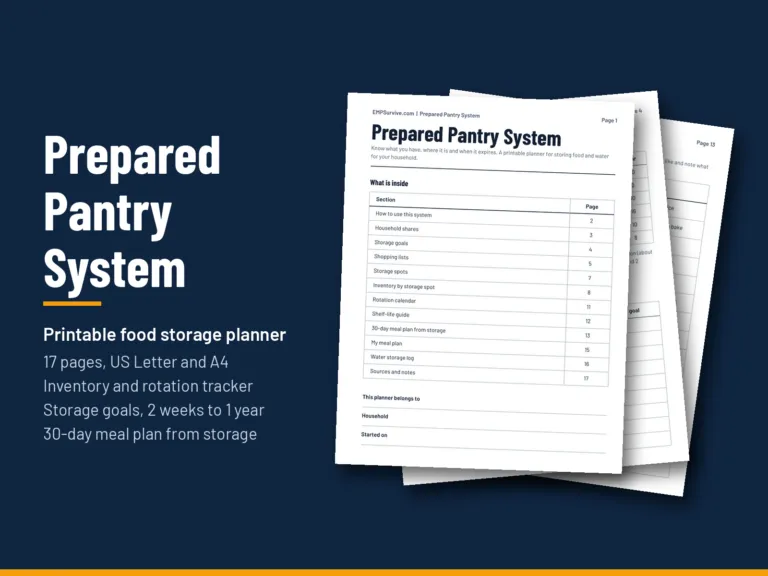
Prepared Pantry System
Know what you have, where it is and when it expires. A printable planner for building your food storage from 2 weeks to a full year.
$3.90 one-time

How can you tell if honey has gone bad?
Look and sniff. Throw it out if it foams or smells like alcohol (MSU Extension). Both are signs it has started to ferment, which usually means water got in.
| What you see | What it means | Keep or toss? |
|---|---|---|
| Cloudy, grainy or hard | Crystallized | Keep. Warm it to make it runny again. |
| Darker than when you bought it | Normal aging | Keep. The flavor may be a little stronger. |
| Foam on top | Fermenting | Toss |
| Smells like alcohol or beer | Fermenting | Toss |
How long does honey last?
| Where | How long |
|---|---|
| Pantry, sealed | Indefinitely if stored right. USDA: about 2 years for best quality. |
| Pantry, opened | Indefinitely, with the lid on and a clean spoon |
| Fridge | Not needed. Cold makes it crystallize faster. |
| The date on the jar | Sell-by or best-by, not an expiration date |
“Best quality” is about flavor and color, not safety. Honey can go a little darker and stronger as the years go by. If you’re checking the rest of the cupboard while you’re at it, our free food shelf life chart covers more than 600 foods from the same USDA data.
How do preppers store honey for years?
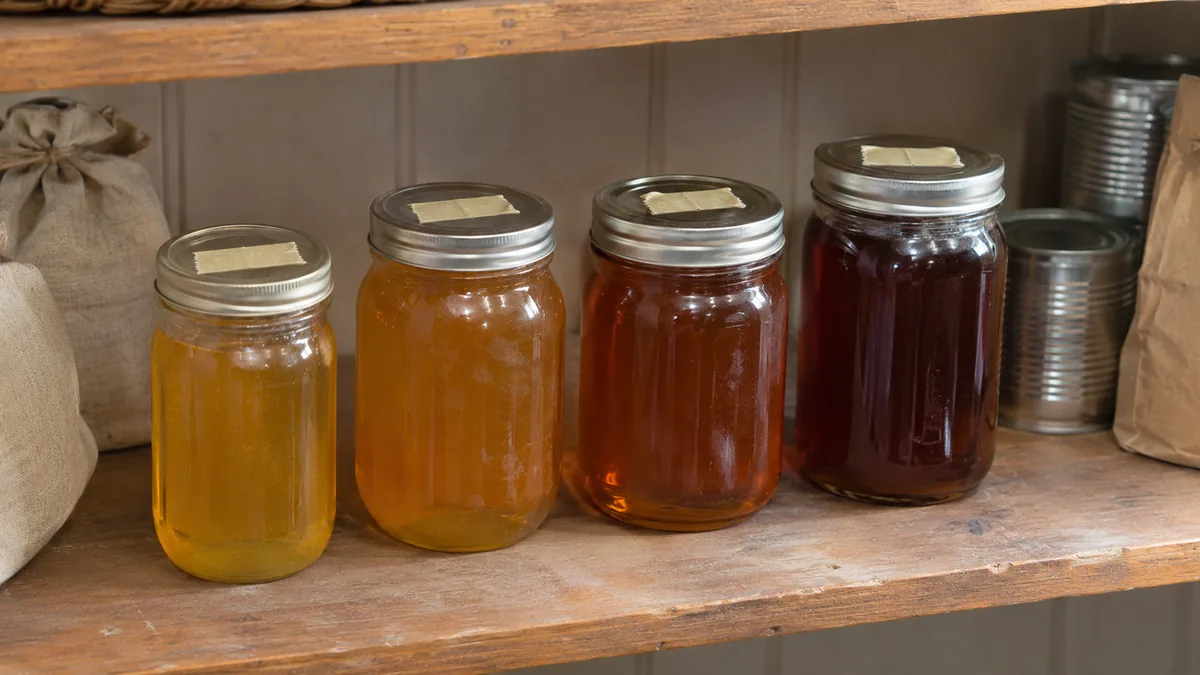
Honey is about the easiest thing to keep in a long-term pantry. Store it somewhere cool, dry and dark, in an airtight container, away from the stove, sunny windows and a hot garage. Use a clean, dry spoon every time. And write the month you bought it on the lid with a marker, so the oldest jar gets used first.
Glass jars are easier to warm than plastic bottles if it crystallizes. If you buy a big tub, pour some into a small jar for the kitchen and leave the rest sealed. How much to keep depends on your household; our free food storage calculator works out a whole pantry in a minute.
Who should never eat honey?
Babies under 12 months. Honey can carry botulism spores, which are dangerous for babies. The CDC, the American Academy of Pediatrics and the National Honey Board all say no honey before the first birthday. That means none in water, food or formula, and no dipping a pacifier in it (University of Florida IFAS Extension).
FAQ
Does honey go bad after opening?
No. Opening the jar doesn’t start a clock. What matters is keeping the lid tight and not letting water, crumbs or a buttery knife into it.
Does honey need to be refrigerated?
No. A cupboard does the job better, and you’ll spend less time at the warm-water bowl.
Is the date on honey an expiration date?
No. A sell-by date tells the store how long to keep it on the shelf, and a best-by date is about flavor. Neither one means the honey is unsafe after that day.
Writing the month on the lid is the low-tech version of a pantry list. When the shelves fill up and you want the whole cupboard on paper, with what to use first, that’s what our Prepared Pantry System planner does. It’s $3.90 as a printable download, and the shelf life chart above stays free.
So go rescue the jar behind the cornstarch. Cloudy honey is usually just honey that got chilly.
Sources
- Mississippi State University Extension, “Does Honey Go Bad?” extension.msstate.edu
- Smithsonian Magazine, “The Science Behind Honey’s Eternal Shelf Life” www.smithsonianmag.com
- University of Florida IFAS Extension, “Infant Botulism and Honey” ask.ifas.ufl.edu
- USDA FSIS, FoodKeeper data (honey) catalog.data.gov

Comments
Comments appear right away. We remove spam, sales links and personal attacks.
No comments yet. Yours can be the first.