
RFID Protector Wallets: Do You Really Need One?

Updated

Quick answer
Looking for the best RFID protector wallet? Our cybersecurity expert tests and reviews the top options to keep your credit cards safe from digital theft in 2026.
In this guide
Tap-to-pay cards are everywhere now, and so are ads warning that thieves can “steal your card right through your wallet.” So is an RFID protector wallet a smart buy, or a fear-based upsell? Here’s what the research actually says, who might benefit from RFID blocking, and what matters more for keeping your money safe.
What Is RFID Skimming?
Look at your credit or debit card. If it has a small sideways Wi-Fi symbol, it’s a contactless card. Inside is a tiny chip and antenna that talk to the payment terminal by radio when you tap, on the same 13.56 MHz frequency that phones use for NFC.
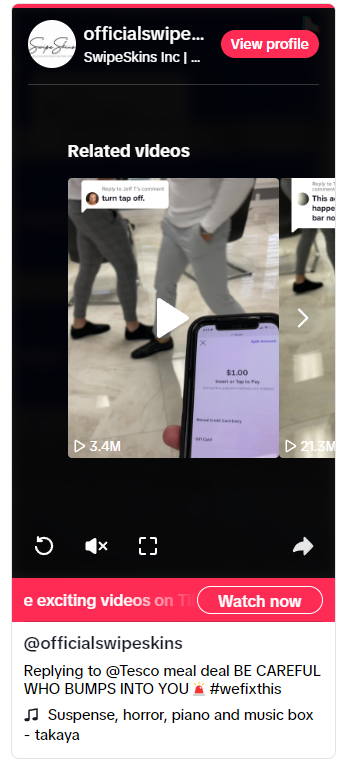
RFID skimming means someone uses their own reader to talk to your card without you knowing, for example by holding a reader close to your pocket or bag in a crowd. The idea is simple. Pulling it off is harder than the ads suggest.
- The range is tiny. Contactless cards are built to work at a few centimeters, typically about 4 to 10 cm (1.5 to 4 inches). A thief has to get very close.
- What can be read is limited. Some cards give up the card number and expiry date. The security code on the back (CVV) and your PIN are never sent over the air.
- Every tap uses a one-time code. Modern cards create a new code for each payment, using a secret key that never leaves the chip. Copied data can’t simply be replayed to make a new in-store payment.
How Real Is the Risk?
Low, but not zero. In 2015, the UK consumer group Which? used a reader bought online to pull card numbers and expiry dates from volunteers’ cards, then placed an online order with a store that didn’t ask for the security code. Security experts pointed out that the real weak spot was the store, not the card: online shops should always ask for the CVV and billing address.
The picture hasn’t changed much since. According to security firm ESET, UK Finance, the British banking trade body, doesn’t even track wireless skimming because it hasn’t seen it happen at any real scale, and no large-scale skimming attack has been publicly documented. Card fraud is very real. It mostly happens other ways: data breaches, phishing emails, fake websites and plain old theft.
How RFID Blocking Works
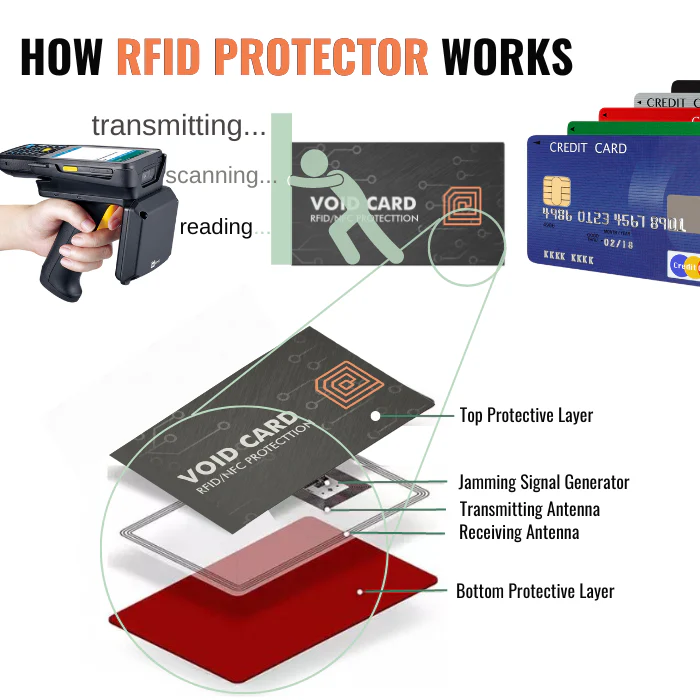
RFID blocking is basic physics. Your card needs radio waves to wake up and answer. A layer of metal, such as aluminum, copper or a metal mesh, stops those waves before they reach the chip. It’s the same idea as a Faraday cage, just pocket-sized.
Blockers are made for the 13.56 MHz band that cards and passports use. Your phone’s GPS, Wi-Fi and cell signals sit on other frequencies, and a blocking card in your wallet won’t get in their way. If you want to protect electronics from much stronger pulses, see our guide to EMP protection for electronics.
Who Might Want RFID Protection?

For most people, RFID blocking for payment cards is optional. It can still make sense if:
- You travel a lot or ride crowded transit. Close contact in a crowd is the one setting where skimming is even possible. A blocker is cheap peace of mind.
- You carry work badges or ID cards. Some older access badges use simple chips that are easier to copy than bank cards.
- Your contactless card is old. If your card is several years old, asking your bank for a new one does more than any wallet.
- You want to stop the wrong card from paying. When you tap a whole wallet, the terminal can pick up the wrong card. A blocker keeps the others quiet.
U.S. passports already have protection built in. According to the State Department, the passport has a metallic element that keeps the chip from being read while the book is closed, and the chip refuses to share its data with a reader that can’t pass a security check.
How to Choose an RFID Blocker
If you decide you want one, here’s what to look for:
- It blocks 13.56 MHz. That’s the band for contactless cards and passports, and most products list it.
- It fits how you carry. A blocking card slips into the wallet you already own. A blocking wallet replaces it. Sleeves cover one card at a time.
- You can test it. Put your card behind the blocker and try to tap it on a payment terminal or an NFC reader app on your phone. If it still reads, the blocker isn’t doing its job.
- The price is sensible. Blocking is a simple layer of metal. You don’t need to pay a premium for it.
Blocking Cards vs. Wallets vs. Sleeves
| Option | Good for | Watch out for |
|---|---|---|
| Blocking card | Keeping the wallet you already like | Results vary by product, so run the tap test |
| RFID wallet | Full coverage with nothing extra to carry | You have to switch wallets |
| Card sleeves | Passports, badges and single cards | Easy to lose, and you take the card out to use it |
| Aluminum foil | A free test of the idea | Tears easily, and gaps let the signal through |
5 Habits That Protect You More Than Any Wallet
An RFID blocker covers one narrow risk. These habits cover the big ones.
1. Use a Different Password Everywhere
Reusing one password means a single data breach can open all your accounts. A password manager makes unique passwords easy.
2. Turn On Two-Factor Authentication
Two-factor authentication adds a code from your phone or an app when you log in. Even if someone gets your password, they still can’t get in.
3. Be Careful on Public Wi-Fi
Open networks at cafes and airports are easy to snoop on. Use your phone’s mobile data or a trusted VPN for banking and shopping.
4. Lock Down Tap-to-Pay on Your Phone
Phone wallets ask for your face, fingerprint or PIN before they pay. Keep that turned on, and switch NFC off if you never use it.
5. Check Your Statements Every Week
Fraud caught early is easier to fix. Turn on transaction alerts in your banking app so you see every charge as it happens.
Final Thoughts
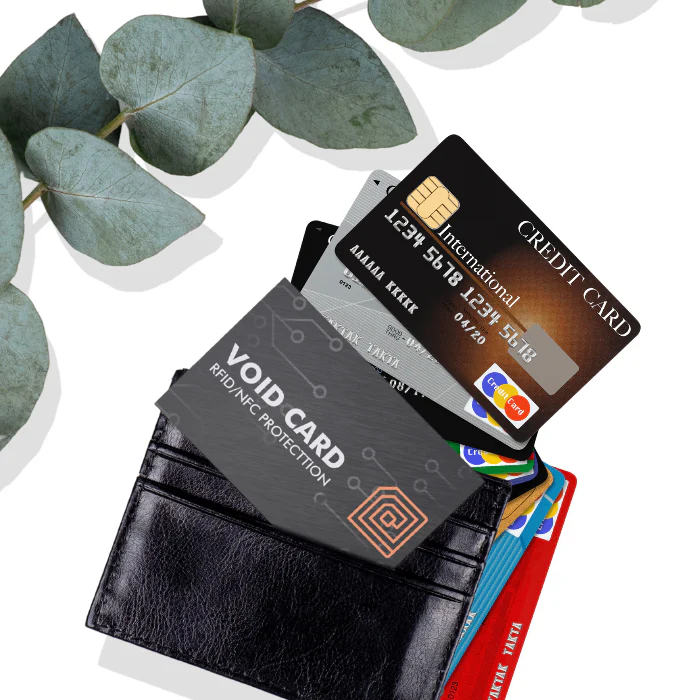
RFID skimming is possible but rare, and modern cards make stolen tap data hard to use. An RFID protector wallet or blocking card won’t hurt, and it’s cheap peace of mind if you travel a lot or carry access badges. Just don’t let it replace the habits that stop most real fraud: strong passwords, two-factor login, care on public Wi-Fi and watching your statements.
It’s the same lesson that applies to EMP protection: understand the real threat first, then spend your money where it counts.
Questions People Ask About RFID Protection
How can I tell if my cards have RFID chips?
Look for the sideways Wi-Fi symbol on the front or back of the card. Most cards issued in recent years have it.
Couldn’t I just wrap my cards in aluminum foil?
Foil can block the signal, but it tears, wrinkles and leaves gaps, so results are hit or miss. It’s fine as a free test, not as a long-term fix.
Will an RFID blocker affect my car key fob?
A blocking card in your wallet won’t affect a fob in another pocket. If you have a keyless-entry car, a signal-blocking pouch for the fob is worth more than an RFID wallet, because car thieves use relay attacks to open and start keyless cars.
Do RFID blockers wear out?
The metal layer doesn’t get “used up,” but it can crack or tear with heavy wear. If you’re not sure, run the tap test again.
Can’t I just keep my wallet in my front pocket?
A front pocket doesn’t block radio signals, but skimming needs a reader within a few inches, so a front pocket still makes it harder in a crowd. It also helps against ordinary pickpockets.
Do I need RFID protection for my passport?
A U.S. passport has shielding built into the book, so the chip can’t be read while it’s closed. A sleeve adds little for a U.S. passport.
Sources: ESET on RFID blocking, SecureIDNews on contactless pickpocketing, The Register on the 2015 Which? test, and the U.S. State Department’s electronic passport page.


Comments
Comments appear right away. We remove spam, sales links and personal attacks.
No comments yet. Yours can be the first.