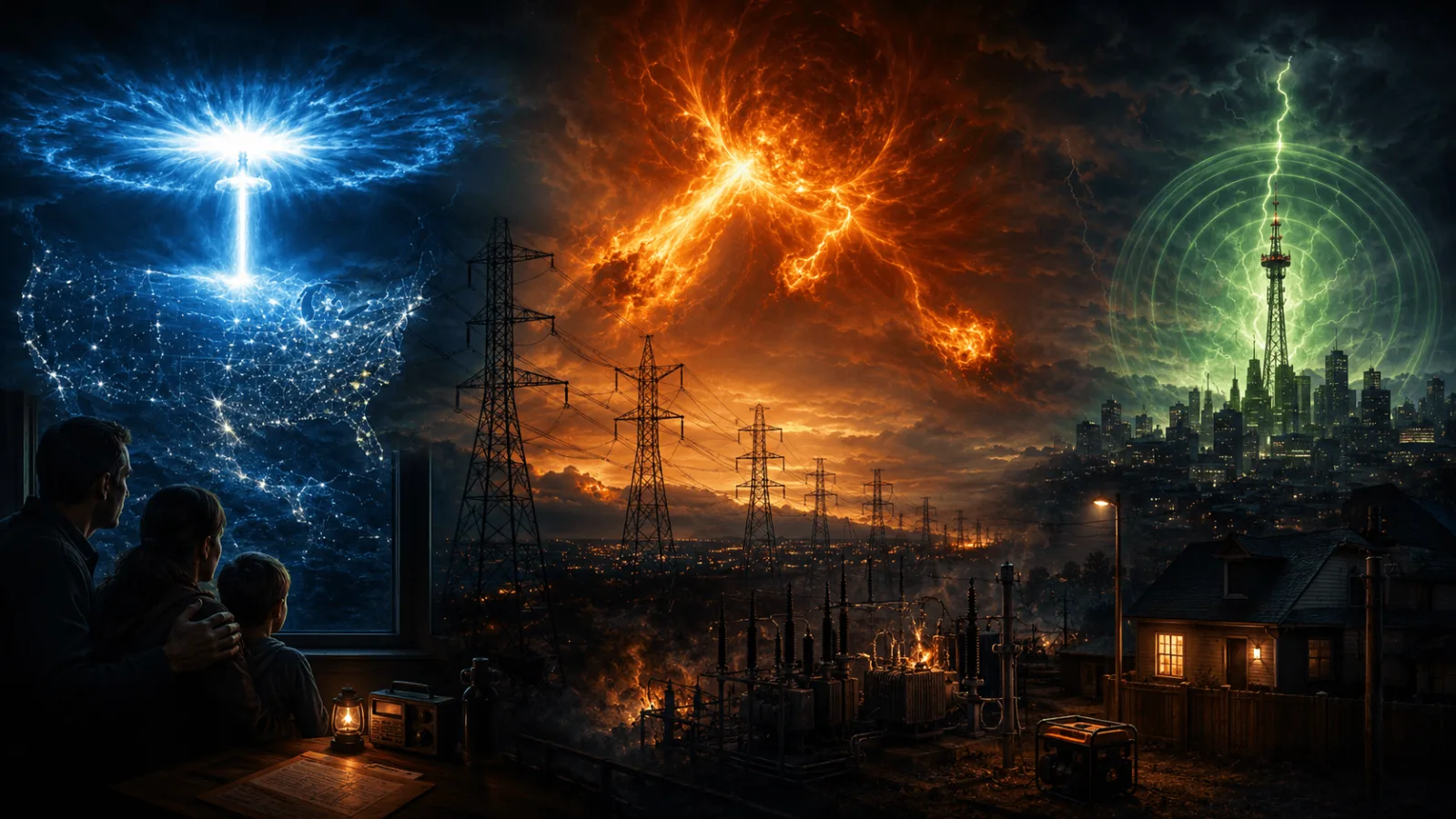
On July 22, 2015, the Senate Committee on Homeland Security and Governmental Affairs held a hearing titled "Protecting the Electric Grid from the Potential Threats of Solar Storms and Electromagnetic Pulse." Its chairman, Sen. Ron Johnson (R-Wis.), opened by saying the purpose was to pull the country's head out of the sand — and stated there is "100% certainty" that a large electromagnetic pulse or geomagnetic disturbance event will happen at some point in the future.
Then Johnson asked his witness what an extended grid-down period would actually do to American society. R. James Woolsey — former Director of Central Intelligence — answered by citing the 2008 EMP Commission report, which contained two separate estimates: one in which roughly two-thirds of the U.S. population dies within about a year, and one in which 90% does.
That distinction matters, and most articles get it wrong. Johnson supplied the certainty. Woolsey supplied the casualty figure, and he was quoting a congressional commission, not guessing. The EMP survival rate for the United States, under current grid conditions and average preparation levels, is that grim — on paper.
Here's what that statement actually means — and what it doesn't.
"100% certainty it will happen eventually" is not the same as "it happens next Tuesday." The distinction matters, because how you interpret that warning determines whether you take a proportional action or freeze in panic. This article is for people who want to take action. The 90% casualty projection is built on a baseline assumption of zero preparation. Our goal is to move you off that baseline — permanently.
Unpacking the "100% Certainty" — What the Science Actually Says
Here's what most people get wrong about Johnson's statement: certainty about eventual occurrence is not a prediction of imminent catastrophe. It's the same mathematical certainty that a massive earthquake will eventually strike the Cascadia Subduction Zone. The science supports the claim — but the timeline is measured in probabilities across decades, not a countdown clock.
The 1859 Carrington Event remains the benchmark. A coronal mass ejection (CME) of that magnitude struck Earth and induced currents strong enough to set telegraph offices on fire. On July 23, 2012, a CME that researchers rated at least as strong tore through Earth's orbit — and hit empty space, because our planet had passed through that stretch of orbit roughly a week earlier. Had the eruption happened seven days sooner, Earth would have been directly in the line of fire.
Daniel Baker of the University of Colorado, who co-authored the 2013 study of the event in the journal Space Weather, put it bluntly: if it had hit, we would still be picking up the pieces. A National Academy of Sciences assessment placed the potential economic impact of a storm on that scale above $2 trillion, with damaged high-voltage transformers taking years rather than weeks to replace.
What this means: The 2012 near-miss wasn't a model or a projection. It was a real Carrington-class CME that crossed Earth's orbital path about a week after we left it. The physics that would have triggered cascading grid failure were fully in place. Only timing saved us — and timing is not a defense you can rely on twice.
Solar Cycle 25 began in December 2019 and ran hotter than forecast. NASA and NOAA announced in October 2024 that it had reached solar maximum, which means we are now in the cycle's declining phase — and here is the part almost nobody covers correctly: the declining phase is not the safe part. Historically, some of the most violent solar events arrive after maximum, sometimes years after. Solar Cycle 23 peaked in 2001 and still produced the back-to-back extreme geomagnetic storms of Halloween 2003. Solar Cycle 24 peaked in 2014 and produced its two largest flares in September 2017.
You don't have to go back to 2003 for an example. On November 11–13, 2025 — a full year after solar maximum — a severe geomagnetic superstorm hit Earth, triggered by coronal mass ejections that accompanied several of the six X-class flares the sun produced that month. Most people who noticed it at all noticed the aurora.
What they didn't notice was the GPS. Endawoke Yizengaw and colleagues at The Aerospace Corporation analyzed the event and published their findings in Geophysical Research Letters: positions across parts of the continental United States drifted by more than 10 meters — about 33 feet — against a system that normally delivers accuracy under three meters. The cause was ionospheric scintillation, the flickering that happens when GPS signals cross a disturbed upper atmosphere. That effect is common near the poles and the equator and rare at mid-latitudes like most of the US, where it had only ever been recorded at isolated sites. This time it stretched coast to coast, across a range of longitudes never documented before — far enough off to disrupt precision agriculture and autonomous vehicles, according to the researchers.
Why this matters here: nothing about that storm was a worst case. The grid held. It arrived in a season when American farm equipment mostly wasn't in the field. And it still pushed a system that roughly every logistics chain, emergency service, and food distribution network in the country quietly depends on. It also happened a year past the peak of a solar cycle that was supposed to be winding down — which is the whole point. Worth noting for your own planning: a paper map and a compass you know how to use cost almost nothing and do not care what the ionosphere is doing.
Separately, physicist Pete Riley analyzed more than fifty years of solar records and calculated the odds of a Carrington-class storm striking Earth within a ten-year window at roughly 12%. That is not a doomsday number. It is an insurance number — higher than the odds most people accept when they buy flood coverage.
So no, an EMP event is not imminent. But "we passed the peak" is not the reassurance it sounds like. For a deeper look at how geomagnetic storms compare to nuclear EMP in terms of infrastructure impact, see our breakdown in Geomagnetic Storm vs. Nuclear EMP: Which Threat Should You Prepare For?
The honest framing: the threat is real, the timeline is uncertain, and uncertainty is not a reason for inaction. It's the exact reason preparation has permanent value — it doesn't expire if the event doesn't happen next year.
E1 vs. E3 — Why These Two Threats Need Different Preparation
Almost every article on this subject uses "EMP" and "solar storm" as if they were the same event. They are not — and the difference decides what you should actually buy.
A high-altitude nuclear detonation produces three distinct pulses. The E1 pulse arrives in billionths of a second, fast enough to overwhelm the small circuits inside phones, laptops, radios, and vehicle control modules. The E2 pulse behaves much like a lightning strike, which most infrastructure already carries some defense against. The E3 pulse is slow — seconds to minutes — and behaves like an enormous surge pushed through long conductors. That is the component that destroys high-voltage transformers.
A geomagnetic disturbance from the sun produces only the E3-type effect. Geomagnetically induced currents flow through transmission lines and transformer windings. It is why the Carrington Event set telegraph offices on fire — telegraph wire was the long conductor of 1859.
What this means: in a severe solar storm, the grid can be down for a year while the phone in your pocket, the radio on your shelf, and the truck in your driveway all still work. There is simply nothing left to plug into. In a nuclear EMP scenario, you can lose the grid and the local electronics along with it.
So the practical rule for EMP hardening is narrower than most gear lists admit: a Faraday enclosure is real protection against E1 and close to irrelevant against E3. Store spare radios, charge controllers, and the electronics for your off-grid power system inside one — but understand you are insuring against the nuclear scenario, not the solar one. For the solar scenario, the money belongs in stored water, stored food, and independent generation capacity, because there the failure is the grid itself.
The 9-in-10 Death Rate — Who Dies and Why
The 90% casualty projection isn't a wild guess. The EMP survival rate it implies — about 10% — comes out of a systems-collapse model, not a headline. It's a systems-collapse model. Remove grid power nationally for 12 months and you remove the infrastructure that keeps modern populations alive: water treatment, hospital life support, insulin refrigeration, food distribution networks, fuel supply chains, emergency services dispatch. The deaths aren't all immediate — most aren't. That's what makes this scenario uniquely lethal.
In the first 72 hours, the most immediate casualties come from accidents (traffic systems fail simultaneously), hospital patients on powered life support, and people in medical crisis who can't reach functioning emergency care. Painful. But manageable in numbers relative to what follows.
The mass-casualty phase runs from roughly month two through month twelve. This is where the 90% figure lives. Chronic illness becomes a death sentence without medication access — the CDC reports that roughly 6 in 10 American adults live with at least one chronic disease, and a significant share of them depend on refrigerated medication or powered medical devices. Starvation timelines begin accelerating around weeks eight through twelve as food distribution collapses and urban populations exhaust local supplies. Waterborne illness surges as municipal treatment plants lose power and fuel for backup generators runs out, typically within two weeks.
Bottom line: The 9-in-10 projection is not about the EMP itself — it's about the 12-month infrastructure collapse that follows. Preparation that addresses that timeline is what separates survivors from statistics.
The vulnerable demographic clusters are predictable: urban populations with no food production capacity, people dependent on powered medical devices, elderly individuals without support networks, and households with less than two weeks of stored food — which, according to FEMA's National Household Survey work on preparedness behavior, describes a large share of American households. Rural location helps, but only with logistics to match. Geography alone doesn't save anyone.
Where Most Preppers Fail — Common Gaps in EMP Readiness
Look at the after-action reporting from any extended grid-down event — Puerto Rico after Hurricane Maria, Texas during the February 2021 freeze — and the same pattern shows up. Preparation gaps are almost never about the gear people didn't buy. They're about the assumptions nobody questioned.
Misconception #1 — "I have a generator." A generator is a fuel-dependent grid surrogate. The average household generator runs on gasoline with a tank capacity of 5–8 gallons, consuming roughly one gallon per hour under load. That's a week of fuel at best, assuming you stored it. After that, you're grid-dependent again — except the grid is gone. Generators require ongoing fuel logistics that most households cannot sustain past the two-week mark. They are a bridge, not a solution.
Misconception #2 — "My supplies will last." Timeline miscalculation is the most common failure mode of all. A 90-day food supply sounds substantial until you're feeding four people, managing stress-elevated caloric burn, and realizing that 90 days is month three — still well inside the acute collapse window. The relevant timeline is 12 months minimum, not 72 hours or even 90 days — and the EMP survival rate is calculated across that full year, not the first week.
Misconception #3 — "Rural equals safer." Rural location reduces certain risks — urban violence, population density pressure — but introduces hard logistical problems. Fuel for vehicles, medical access, trade networks, and community defense all require neighbors who are also prepared. An isolated rural household with six months of food is not more resilient than a suburban community of eight households with coordinated three-month supplies and a shared skill set. Isolation is a vulnerability, not an asset.
This isn't about shaming anyone's preparation level. It's about closing the gaps that actually kill people in extended grid-down scenarios — the gaps that gear lists and YouTube videos consistently skip.
The 72-Hour vs. Long-Term Survival Divide
Here's the part most guides miss: the 72-hour survival window — which FEMA correctly identifies as the baseline for emergency preparedness — is almost irrelevant in an EMP scenario. Surviving 72 hours after an EMP event is not the challenge. The food in your refrigerator and the water in your pipes will cover most households for several days without any preparation at all. The challenge is month two through month twelve.
The infrastructure collapse timeline runs roughly as follows, drawn from historical extended-blackout records and published grid-restoration analysis:
- Hours 0–72: Traffic, communications, and point-of-sale systems fail. Hospitals shift to backup generators. ATMs go offline. Most people are inconvenienced, not endangered.
- Days 3–14: Hospital generator fuel runs out. Municipal water pressure drops as pump stations lose power. Grocery store food spoils and shelves empty. Fuel stations can't pump. This is where the first significant mortality wave begins.
- Weeks 2–8: Waterborne illness becomes widespread. Medication access collapses for chronic disease patients. Civil order begins breaking down in dense urban areas. Heating and cooling failures become life-threatening depending on season and geography.
- Months 2–12: Starvation, disease, exposure, and violence account for the bulk of the 90% projection. This phase is where preparation — real, tiered, systems-based preparation — is the only variable that changes outcomes.
Your EMP Survival Checklist: 72-Hour Essentials is the starting point, not the finish line. Build it first. Then build past it.
Actionable Survival Tiers — From Basic to Advanced
This isn't theoretical. Each tier represents a measurable increase in survival probability based on the infrastructure collapse timeline above. The costs are real ranges, not aspirational numbers.
Tier 1 — Immediate Household Baseline (Target: Complete within 30 days)
This tier addresses the first two weeks. It is the non-negotiable foundation — without it, no other preparation is meaningful because you won't survive long enough to use it.
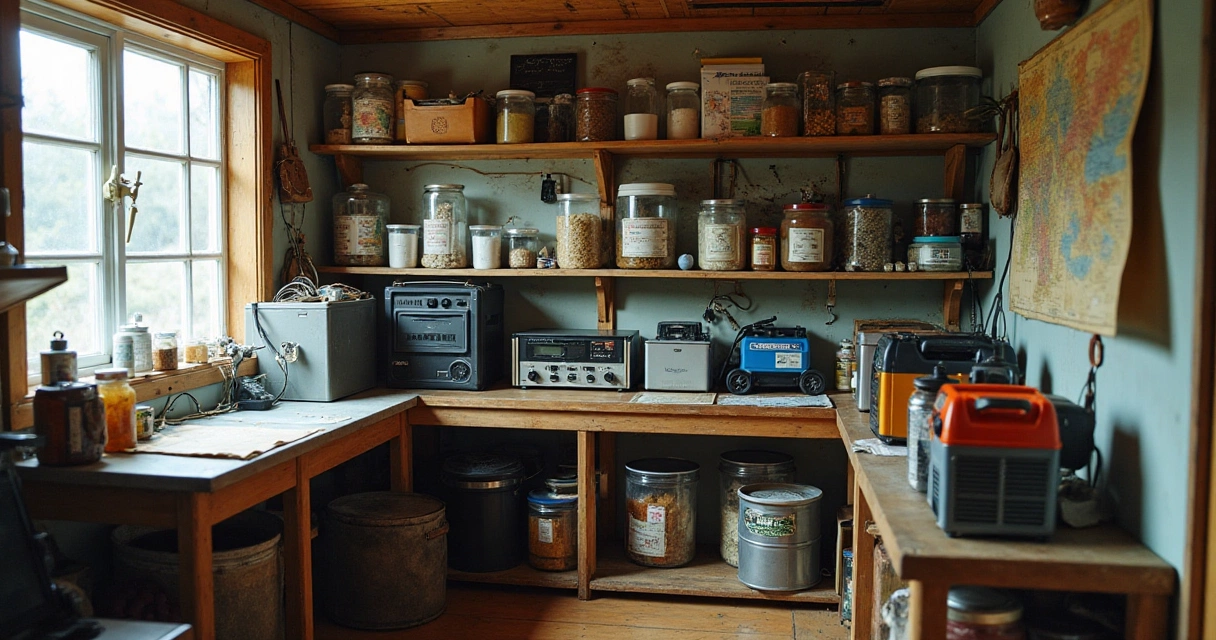
- Water: 1 gallon per person per day, minimum 14-day supply. For a family of four, that's 56 gallons. Food-grade 55-gallon barrels run $40–$65 each; a quality gravity filter like a Berkey or comparable unit costs $200–$300 and adds indefinite filtration capacity from any freshwater source.
- Food: 2-week supply of non-perishable, no-cook-required staples. Budget $150–$250 for a family of four covering caloric needs without cooking infrastructure.
- Medical: Prescription medication buffer (90-day supply where your physician will prescribe it), trauma kit with tourniquet and wound packing, basic OTC medications for pain, fever, and GI illness. Cost: $75–$200 depending on existing supplies.
- Cash: Small denominations only. Electronic payment infrastructure fails immediately. $300–$500 in mixed bills covers most short-term exchange scenarios.
- Manual tools: Can opener, hand-pump water transfer, non-electric lighting (quality LED lanterns with lithium batteries, not candles as a primary). Budget $50–$100.
Tier 1 total cost range: $600–$1,200 for a family of four. This is a proportional preparedness step — it doesn't require lifestyle change, but it does require accuracy in implementation.
Tier 2 — Resilient Foundation (Target: Complete within 3–6 months)
Tier 2 extends your survival window through the acute collapse phase — roughly 90 days — while adding communication and basic energy independence.
- Food systems: 90-day caloric supply using a combination of freeze-dried long-term storage ($400–$700 for quality brands per person), bulk grains and legumes, and a cooking solution that doesn't depend on grid power (propane camp stove with 10+ fuel canisters, or a wood-burning rocket stove at $80–$150).
- Backup power (non-grid): A quality portable solar generator — 1,000–2,000Wh capacity — paired with 200–400W of folding or rigid solar panels. Realistic budget: $800–$2,000. This powers medical devices, communication equipment, and lighting without fuel dependency. See our guide on EMP-Proofing Your Home: Faraday Cage Myths vs. Real Protection for how to protect these electronics before an event occurs.
- Communication: A battery or hand-crank emergency radio (NOAA-capable), and ideally a handheld ham radio for your area's emergency nets. Technician license is free to study for at HamStudy.org and costs $15 to test. Radios run $30–$120 for quality units.
- Security: Perimeter awareness, basic access control, and — where legal in your jurisdiction — appropriate defensive tools with training. This category is highly individual; budget accordingly.
Tier 2 total investment: $2,500–$5,000 above Tier 1, depending on existing assets.
Tier 3 — Long-Term Sustainability (1+ Year Independence)
Tier 3 is where you exit the casualty statistics entirely. This is energy independence, food production, water independence, and community integration — not individual gear accumulation.
- Energy: Hardened solar array with battery bank (10–20kWh), ideally with components stored or protected in a Faraday enclosure. Cost: $8,000–$25,000 depending on system scale and existing infrastructure.
- Food production: A functional kitchen garden, small livestock (chickens are the highest-ROI entry point), and seed bank. This takes seasons to establish — start before you need it.
- Water independence: A gravity-fed cistern, hand-pump well, or rainwater collection system with filtration. Regional regulations vary; check local ordinances. Cost: $500–$5,000 depending on solution.
- Community network: This is addressed in the next section — and it may be the single highest-value investment at this tier.
Why Location and Community Matter More Than Gear
This isn't a soft point about neighborliness. It's a hard systems argument. Individual preparation has an asymptotic ceiling — there are things a single household cannot do regardless of budget. You cannot maintain a 24-hour security watch. You cannot specialize in medical care, mechanical repair, food production, and communications simultaneously. You cannot trade for skills you don't have if you have no trading partners.
A network of ten prepared households operating in coordination is not ten times more resilient than one prepared household. It is orders of magnitude more resilient — because it enables specialization, redundancy, mutual defense, and skill distribution that no individual can replicate. This is not opinion. This is how every pre-industrial community that survived extended grid-equivalent conditions actually functioned.
Bottom line: The community multiplier effect is real and measurable. Two households with overlapping skill sets and shared communication plans outperform a single household with twice the gear, every time the scenario runs past 60 days.
Urban environments carry the highest risk density — population pressure, supply chain dependency, and limited food production capacity. Suburban environments offer a middle path with more space and lower density, but require intentional community building. Rural settings reduce external pressure but demand internal logistical capability.
None of these is automatically superior. The question is what you're building around your location — not whether your ZIP code saves you.
Finding your network starts with local CERT (Community Emergency Response Team) programs through FEMA, amateur radio emergency nets through ARRL's ARES program, and existing neighborhood preparedness groups. Building one from scratch is slower but achievable — our guide on Building a Prepared Community: Beyond Solo Prepping walks through both paths with real structure and timelines.
Moving from Statistic to Survivor
The 9-in-10 death rate Congress heard in that 2015 hearing is not a fixed outcome. It's a description of what happens to an unprepared population in a total infrastructure collapse — and "unprepared" is a variable you control. The projection assumes the average American, with less than two weeks of food, no water storage, no backup power, no medical buffer, and no community network. That description fits most households today. It doesn't have to fit yours.
The EMP survival rate is a population average, not a personal verdict. Your preparation tier determines your position in that projection — not luck, not location, not resources alone. Tier 1 is achievable for most households within 30 days and under $1,200. That single step moves you from the statistical majority into a meaningfully different risk category for the first two weeks of any grid-down scenario.
Identify your current tier honestly. Then commit to one specific upgrade within the next 90 days — not a general intent to prepare, but a specific action: 56 gallons of stored water by a date, a solar generator ordered and delivered, a first aid course completed. Use the EMPSurvive readiness assessment to audit exactly where your gaps are and what they cost to close.
The grid failing is not the threat. Being average when it happens is.