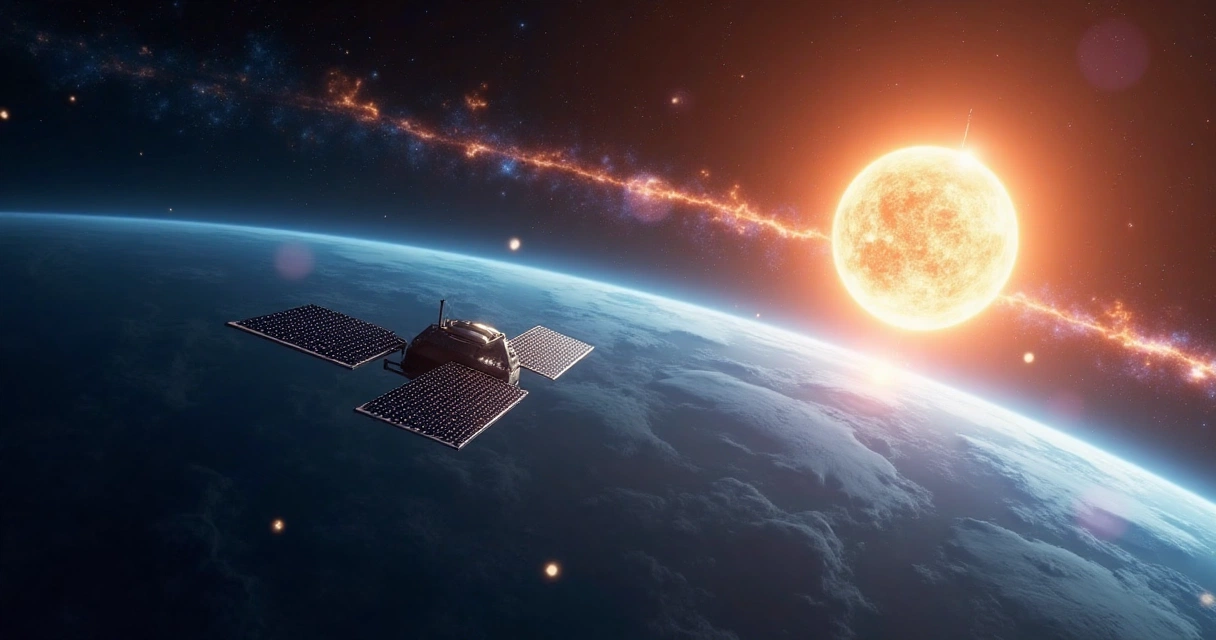
The emerging threat landscape for solar activity has sharpened in recent years. The May 2024 Jennifer Gannon geomagnetic storm reached G5 classification—the highest level on NOAA's Space Weather Scales—demonstrating that extreme solar events remain an active threat to critical infrastructure.
Current space weather monitoring relies primarily on satellites positioned at the L1 point between Earth and Sun, typically providing 15–45 minutes of warning before a coronal mass ejection reaches the magnetosphere. A compact CubeSat system, according to reporting on this emerging capability, could position detection assets closer to solar activity sources, potentially extending warning time to several hours.
Why this matters: Major geomagnetic storms pose direct risks to power grid stability, satellite operations, GPS-dependent navigation systems, and long-distance communications. The 2024 event provided real-world validation that G5-level storms are not historical artifacts. Extended warning time—moving from under an hour to multiple hours—would give grid operators, emergency managers, and critical infrastructure teams measurable opportunity to implement protective protocols: load shedding procedures, equipment isolation, and contingency activation.
The CubeSat approach offers a scalable, cost-efficient pathway to redundancy in space weather detection. Small satellites are cheaper to deploy and can be positioned in multiple orbital configurations, reducing single-point-of-failure risk inherent in current L1-based systems.
What to track: Development timelines for CubeSat constellation deployment, integration with NOAA's Space Weather Prediction Center, and validation testing under actual geomagnetic storm conditions. Real-world performance data will determine whether theoretical warning extensions translate to operational advantage.