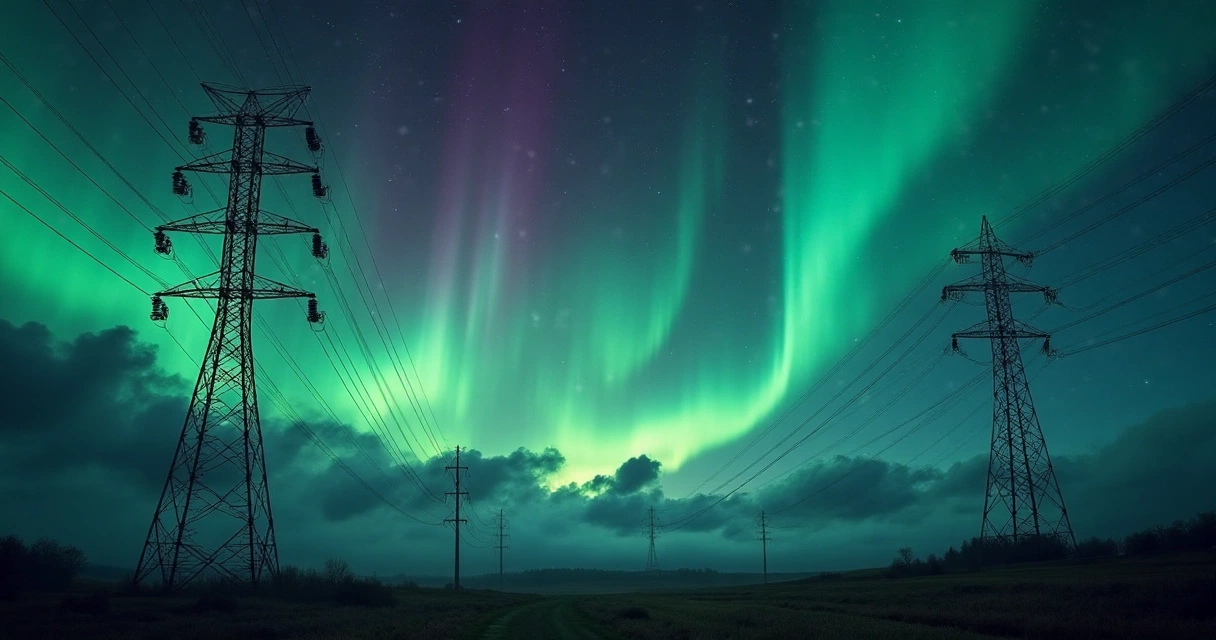
According to reporting from EarthSky, forecasters are tracking up to two bursts of fast solar wind originating from a coronal hole. The associated coronal mass ejections (CMEs) are expected to be glancing blows, but models suggest they could push geomagnetic conditions to G1 (minor) storm levels, with a possibility of G2 (moderate) and even a slight chance of G3 (strong) storms.
Why this matters: Geomagnetic storms at G1-G3 levels pose real risk to electrical infrastructure, particularly transformers on distribution networks. Communications systems, GPS accuracy, and satellite operations degrade predictably at these thresholds. For preppers and infrastructure operators, G2-G3 events warrant active monitoring of grid status and backup power readiness.
The distinction here is important: these are CMEs described as "glancing," meaning a direct hit is not forecast. This reduces the probability of G4 or G5 extreme storm conditions. However, forecast uncertainty at the 24-48 hour mark is inherent—the actual impact could shift. EarthSky's reporting does not specify impact timing, only that conditions may develop.
Historically, G3 storms are not rare (they occur roughly once per solar cycle), but they do cause measurable effects. The May 2024 geomagnetic storms reached G4 levels and produced widespread aurora visibility across the northern U.S. while affecting some agricultural equipment and utility operations. This event is positioned as lower probability for that scale of disruption, but the range G1-G3 is credible given current source data.
The solar cycle we're in (Cycle 25) remains active. Multiple coronal holes and CME-producing regions are common through 2026. Single events rarely cascade into systemic grid failure in developed nations, but they remain a useful barometer for infrastructure vulnerability and a concrete reminder that solar activity is not a theoretical threat.