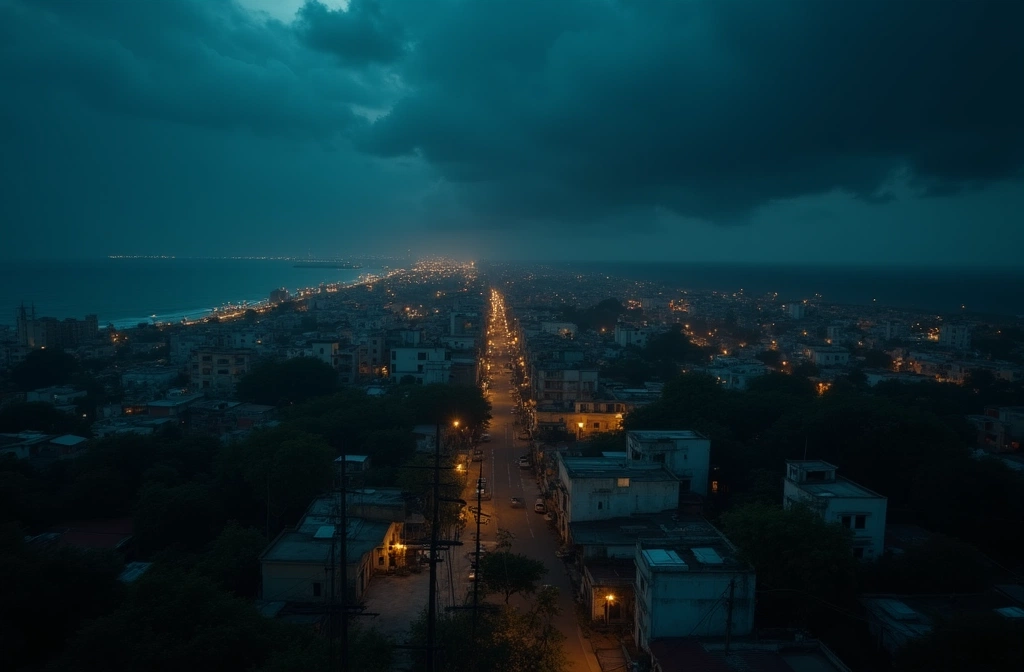
Cuba's National Electric Grid experienced a nationwide blackout on July 6, 2026, according to reporting from U.S. News & World Report. Grid operator UNE announced it was investigating the cause of the collapse.
Context matters here. Cuba has suffered months of cascading power failures — first hours-long outages, escalating to multi-day blackouts. U.S. News attributes these recurring failures in part to a deteriorating electrical infrastructure and other cited factors.
Why this matters: A complete grid collapse, even in a smaller nation, signals critical infrastructure vulnerability. When an entire grid fails simultaneously, it reveals either a single point of failure in generation or distribution, or systemic degradation that has reached critical mass. The fact that Cuba's grid has been declining progressively — not suddenly failing once — suggests the infrastructure may lack redundancy, maintenance capacity, or both.
For preparedness readers, this is a case study in how grid failure cascades. A blackout of this scale affects not just lighting and heating, but water treatment, fuel distribution, communications, and emergency services. Cuba's situation is constrained by geopolitical and economic factors specific to the island, but the mechanics of grid collapse apply universally: aging infrastructure + insufficient maintenance + limited spare capacity = systemic fragility.
The unknown cause is significant. Until UNE publishes findings, we don't know whether this was equipment failure, a demand spike the grid couldn't handle, a generation loss, or something else. That gap in information is itself a signal — it means diagnosis takes time, and during that time, services remain offline and populations remain without power.
Watch for: UNE's published investigation results. A clear technical cause (failed transformer, generation plant offline) suggests localized remediation. A diffuse cause (aging infrastructure across multiple points) signals prolonged recovery and higher risk of recurrence.