

7 Medicinal Herbs to Grow at Home (and What Science Says)

Quick answer
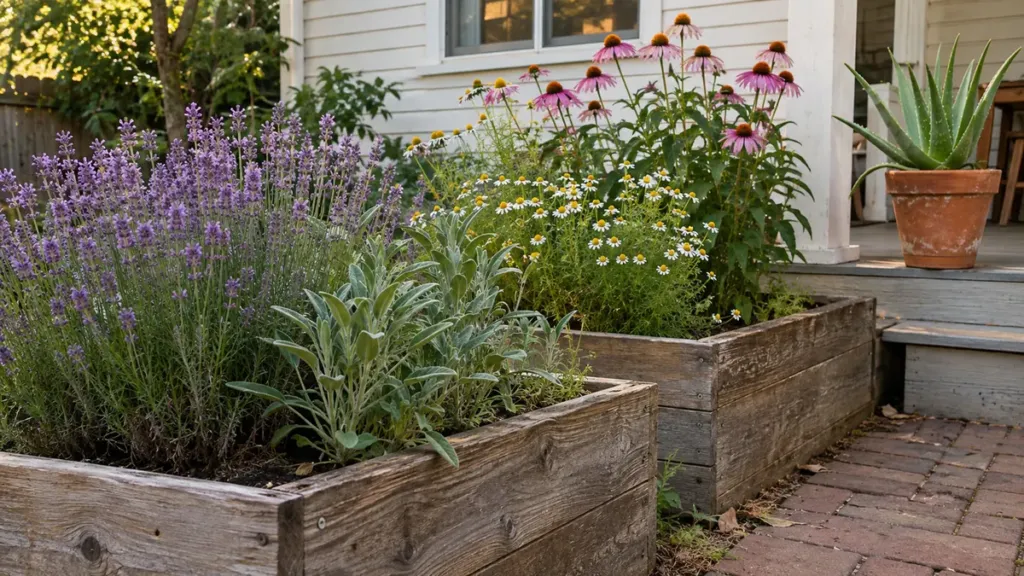
The best medicinal herbs to grow at home are peppermint, chamomile, lavender, sage, garlic, echinacea and aloe vera. Here's what the NIH says each one really does, plus a small garden layout and safety notes.
Short answer: The best medicinal herbs to grow at home are peppermint, chamomile, lavender, sage, garlic, echinacea and aloe vera. They grow in an ordinary garden bed or a pot. Research backs some of their old uses better than others, and a few don’t mix with common medicines.
A cold is coming on in the middle of a snowstorm, the roads are closed and the store shelves are picked over. A cup of peppermint tea from your own garden won’t replace the pharmacy. But it’s a small comfort you can grow for the price of a seed packet.
The health facts below come from the National Center for Complementary and Integrative Health, part of the National Institutes of Health (NIH). Each herb links to its own NIH fact sheet.
What are the easiest medicinal herbs to grow?
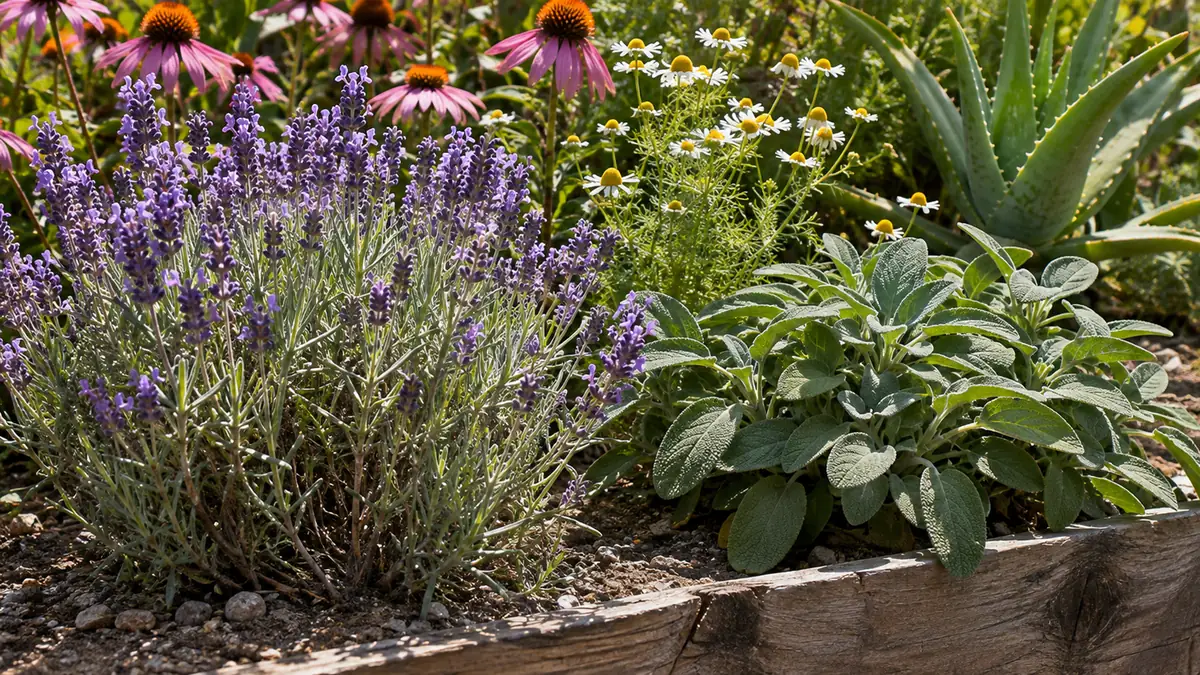
Most of them want full sun and soil that drains. Penn State Extension says lavender and sage “thrive in full sun and in well-drained, dry, gravelly soil.” Peppermint is the odd one out. It likes more water and spreads like gossip, so it gets its own pot.
| Herb | How it grows | What people use it for | What the NIH guide says |
|---|---|---|---|
| Peppermint | Perennial, likes moisture, spreads | Upset stomach, IBS, tea | Peppermint oil helped IBS symptoms in studies; little research on the leaf |
| Chamomile | Easy from seed, full sun | Sleep, nerves, upset stomach | Not enough good evidence yet for most uses |
| Lavender | Woody perennial, dry sunny spot | Calm, sleep, scent | An oral lavender oil product may help anxiety; aromatherapy evidence is weak |
| Sage | Long-lived woody perennial | Hot flashes, cooking | Small studies suggest fewer hot flashes; evidence is limited |
| Garlic | Plant cloves, harvest bulbs | Heart health, colds | Supplements may lower cholesterol “to a small extent”; blood pressure evidence is limited |
| Echinacea | Native perennial coneflower | Colds | “May slightly reduce your chances of catching a cold” |
| Aloe vera | Pot plant, often kept indoors | Burns, skin | Gel on the skin may speed burn healing and ease pain |
What can these 7 medicinal herbs really do?
1. Peppermint: Is the tea as good as the oil?
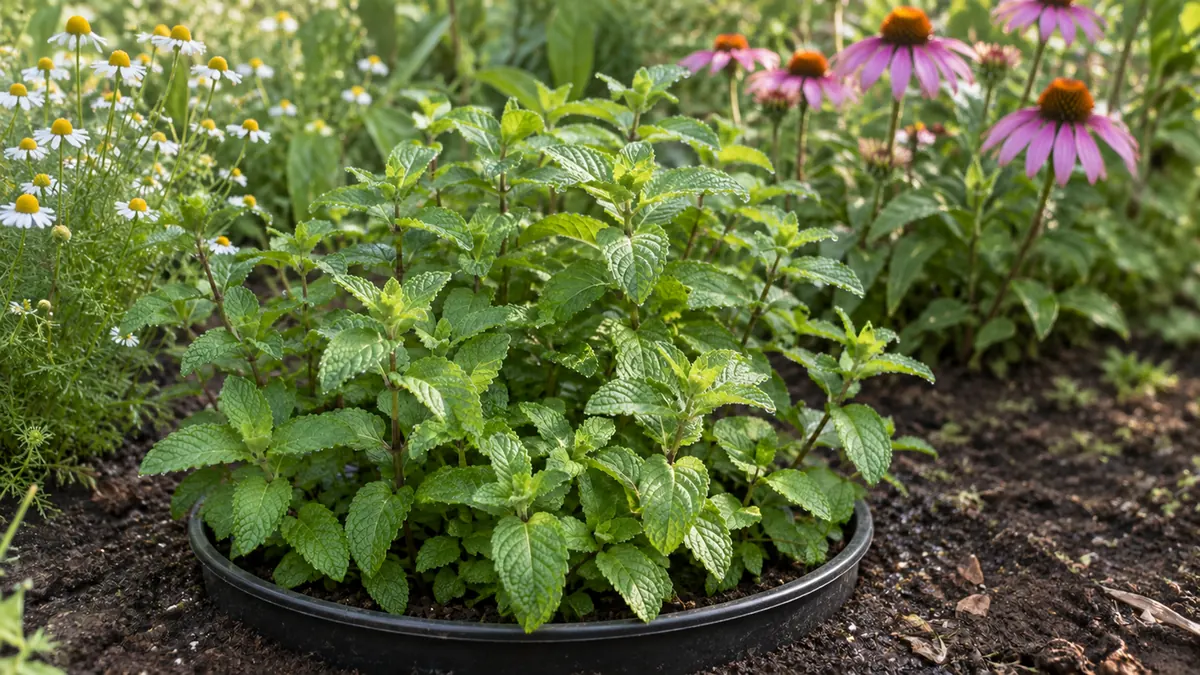
Most people already have a peppermint story, usually the one where it took over the flower bed. The research is mostly on the oil. The NIH guide cites a 2022 review of 10 studies where peppermint oil “was better than placebo at improving overall IBS symptoms.” (IBS is irritable bowel syndrome.) Your garden tea is a gentler, less studied cousin. For more stomach-soothing plants, see our guide to medicinal herbs for digestive health.
Penn State suggests a 3- to 5-gallon pot with drainage holes, sunk in the ground with the rim an inch above the soil. That keeps the runners from wandering. Keep menthol products away from babies’ faces, since it can affect their breathing.
2. Chamomile: Does it really help you sleep?
A bedtime cup of chamomile is about as old-fashioned as it gets, and the little daisy-like flowers come up easily from seed. The NIH guide says there isn’t enough reliable evidence to know how well it works, and one study found no help for insomnia. So we drink it because it tastes like a quiet evening. Skip it if you’re allergic to ragweed or daisies, and check with your doctor if you take warfarin, a blood thinner.
3. Lavender: Is smelling it enough?
Lavender looks lovely by a path and smells even better. Small studies suggest a lavender oil product taken by mouth may ease anxiety. The NIH guide says more research is needed, and the evidence for just smelling it is weaker. Tuck the flowers in a sachet, and ask your doctor before mixing it with sleep or anxiety medicine.
4. Sage: Can it help with hot flashes?
Plant sage once and it comes back every spring, a little woodier each year. A few small studies hint it might help with hot flashes, but the NIH guide calls the evidence limited. The pinch in your Thanksgiving stuffing is likely safe. High doses or long-term use may not be, because common sage contains thujone, a natural chemical that can be toxic in large amounts. Avoid it during pregnancy, too.
5. Garlic: Is it good for your heart?
Garlic earns its spot twice, once in the garden and again in the spaghetti sauce. Push single cloves into the soil, and you’ll dig up whole bulbs later. The NIH guide says supplements may lower cholesterol “to a small extent,” and the evidence on blood pressure is limited. A homegrown bulb is a nice habit. It just isn’t a blood pressure pill.
Supplements can raise the risk of bleeding, so tell your doctor if you take a blood thinner or have surgery coming up. Some old home remedies call for taping raw garlic to the skin. Don’t, because it can cause chemical burns.
6. Echinacea: Will it stop a cold?
Echinacea is the purple coneflower you’ve probably seen in a neighbor’s yard, with butterflies all over it. The NIH guide says it “may slightly reduce your chances of catching a cold,” but it’s unclear whether it shortens one. Some people have serious allergic reactions, so ask your doctor before giving it to a child.
7. Aloe vera: Is the gel good for burns?
Plenty of kitchens already keep an aloe on the windowsill, right where it’s needed. The NIH guide says the gel may speed burn healing and ease pain. That’s handy after a grabbed-the-hot-pan-handle moment. Use the clear gel inside the leaf. The yellow sap just under the skin, called latex, can cause cramps and diarrhea if you swallow it.
Grow it yourself. Plan it on paper.
A printed plan you can follow when the lights are out. US Letter or A4, instant download.

Garden Planner 2027
Plan, grow, harvest and preserve: your whole growing year, one page at a time. Large, easy-to-read pages with room to write.
$9.90 one-time


How do you lay out a small medicinal herb garden?
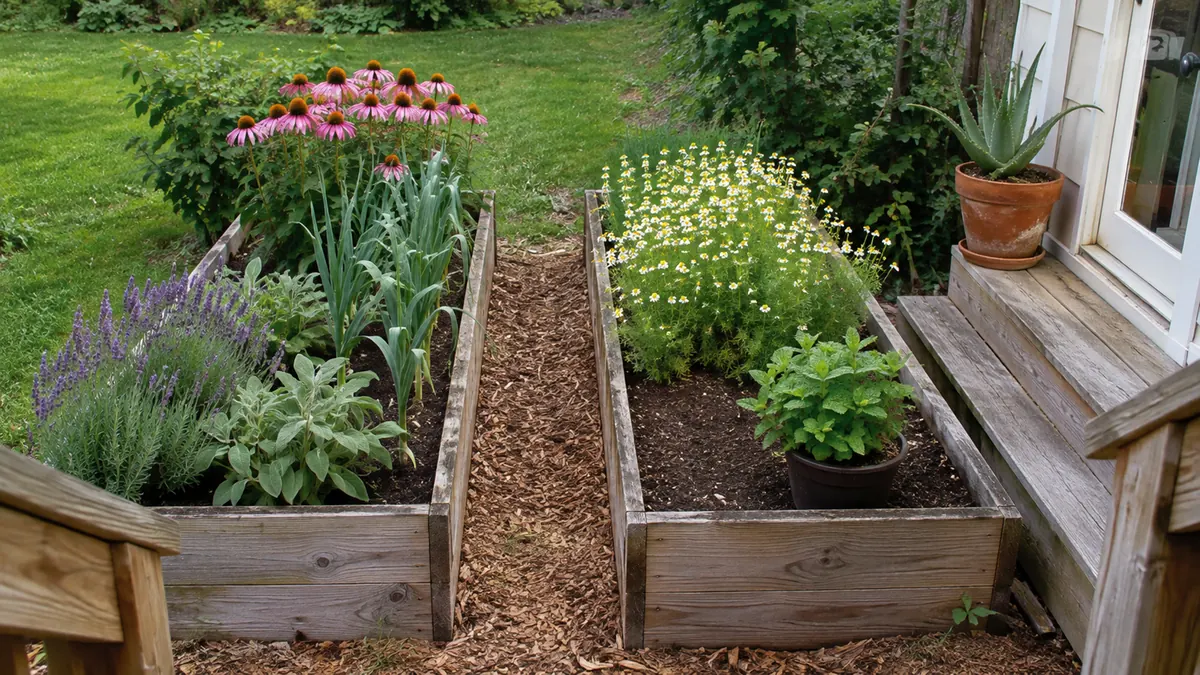
If you have the room, two raised beds about 4 by 10 feet (80 square feet in all) hold all seven with room to spare.
- Dry, sunny bed: lavender and sage on the sunny edge, garlic in front, echinacea at the back where its tall stems won’t shade the others.
- Tea bed: chamomile in a block, plus a peppermint pot sunk into one corner.
- By the back door: aloe in a pot you can carry in and out.
No room for raised beds? A few pots on the porch work fine.
What to do: put one big pot of peppermint by the back door, then add one herb at a time as you find sunny spots.
That’s all the plan you need. If you like planning on paper, our Garden Planner 2027 ($9.90, 43 printable pages) has layout pages, planting calendars and harvest logs.
What goes in a medicinal tea garden?
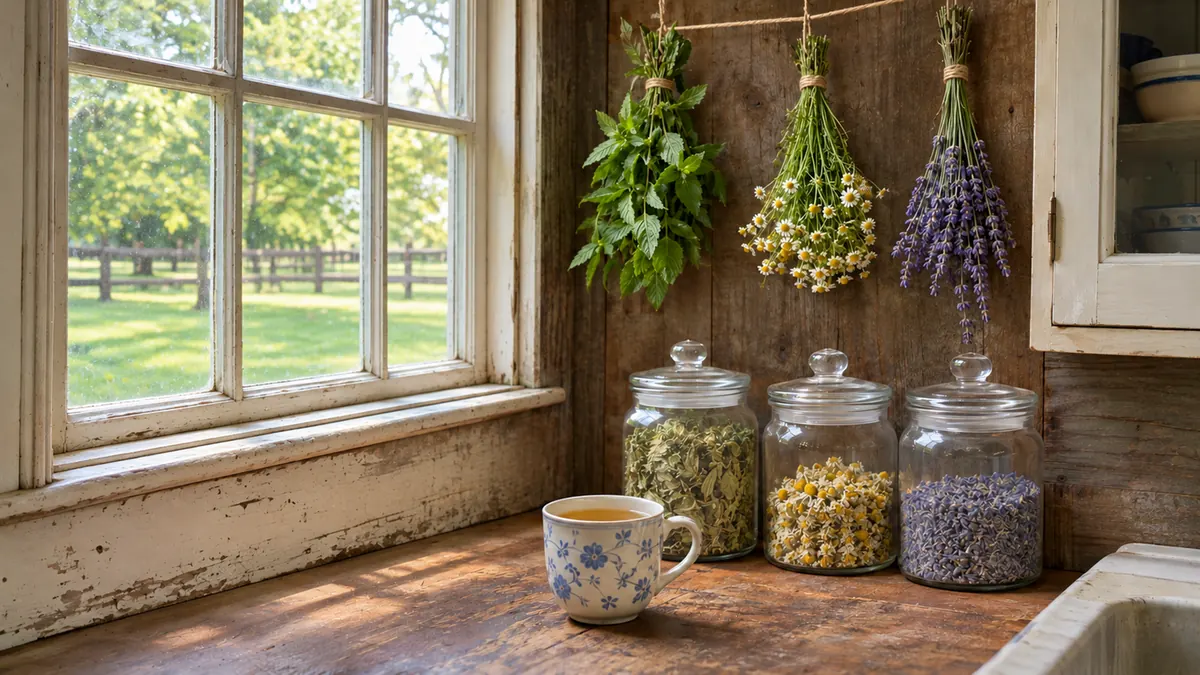
Peppermint, chamomile and lavender cover it. Cut mint leaves as the plant grows, pick chamomile flowers when they open, and snip lavender buds just before they bloom. Hang small bundles upside down somewhere dry and shady, then keep them in airtight jars. That jar is a nice thing to have when the power’s out and the kettle is on the camp stove.
Is it safe to use herbs from your garden?
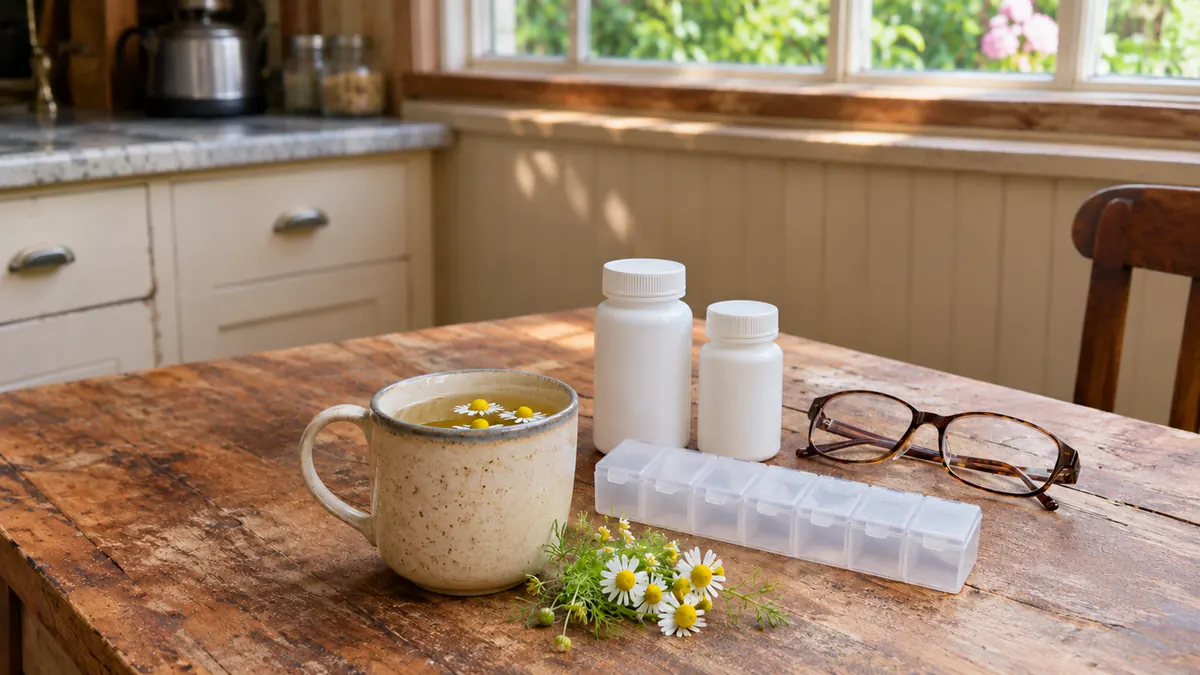
Mostly, in food and tea amounts, but “natural” doesn’t mean harmless. The NIH guide gives the same advice for every herb here. Talk to your doctor or pharmacist first if you take regular medicine, are pregnant or breastfeeding, or are treating a child.
What to do: take your pill list to the pharmacist and ask, “Does this herb mix with any of these?”
Buy plants from a trusted seller so you know exactly what you have, and never swap an herb for medicine a doctor prescribed.
What else do people ask?
What is the easiest medicinal herb to grow?
Peppermint is the hardest to fail with, which is exactly why it lives in a pot. Sage and garlic are close behind.
Can herbs replace medicine in an emergency?
No. A stocked medicine cabinet is still the backbone of any preparedness plan. Think of the garden as comfort for small things, like a soothing tea or a dab of aloe on a kitchen burn.
Can I grow medicinal herbs indoors?
Some of them. University of Illinois Extension lists sage and mint among the easiest herbs to grow indoors, and aloe is already a houseplant in plenty of homes.
Which of these seven is already growing in your yard?
Start with one pot of mint. Your future self, sipping tea in a dark kitchen, will thank you.
Sources: National Center for Complementary and Integrative Health (NIH) fact sheets: Peppermint Oil, Chamomile, Lavender, Sage, Garlic, Echinacea, Aloe Vera; Penn State Extension, Growing Herbs in the Garden; University of Illinois Extension, Growing Culinary Herbs.


Comments
Comments appear right away. We remove spam, sales links and personal attacks.
No comments yet. Yours can be the first.